Edo State is one of the most culturally rich regions in Nigeria, with traditions that date back centuries to the powerful Benin Kingdom. From royal traditions to legendary festivals, Edo culture has continued to stand out and influence history, art, and identity across Africa.
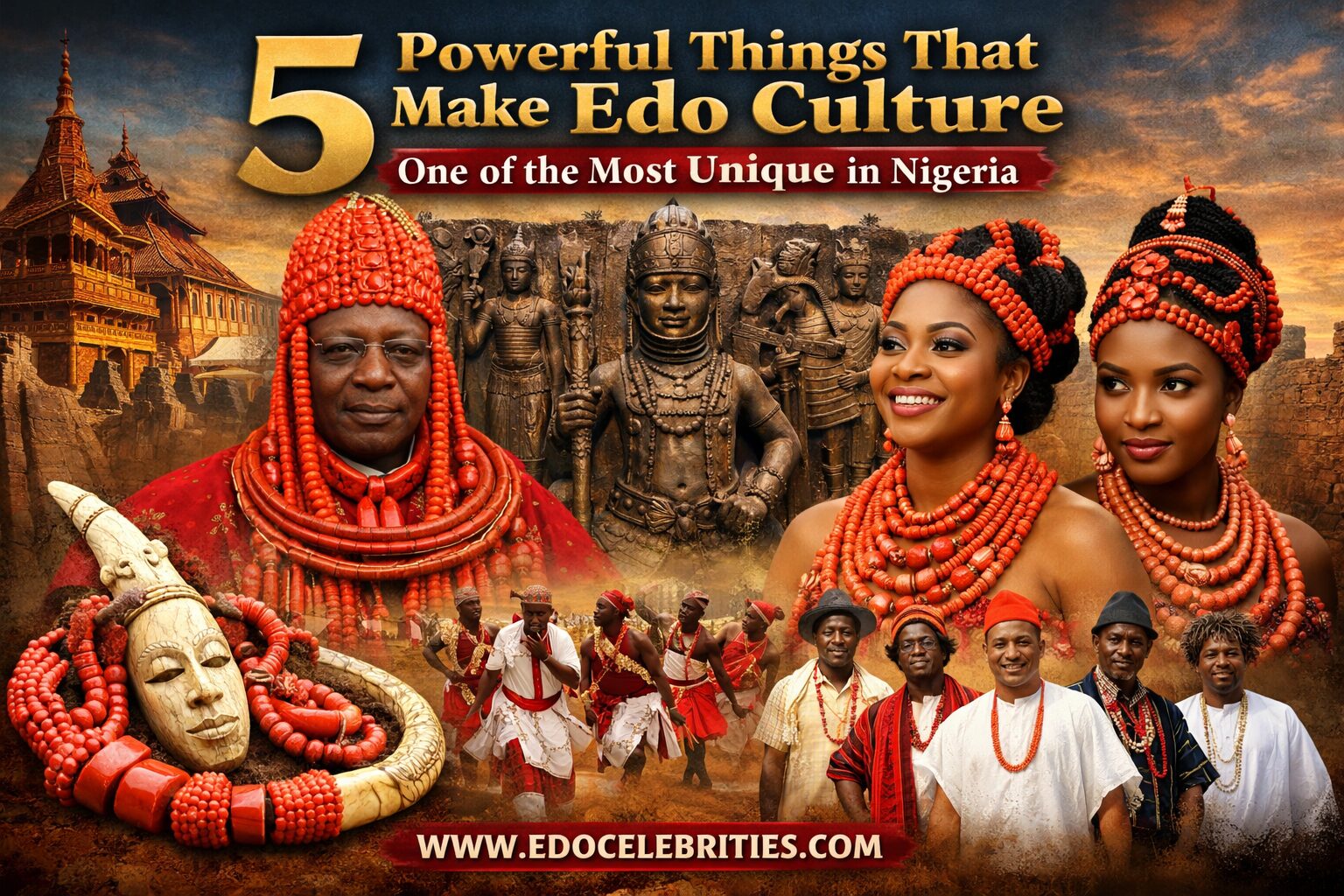
Here are five powerful things that make Edo culture one of the most unique in Nigeria.
1. The Powerful Monarchy of the Oba of Benin
At the center of Edo culture is the respected throne of the Oba of Benin, one of the oldest surviving monarchies in Africa. The Oba is regarded not only as a political figure but also as a spiritual and cultural symbol of the Edo people.
The monarchy traces its roots back centuries to the powerful Benin Kingdom, which once dominated trade, art, and diplomacy in West Africa. Even today, the Oba remains a highly respected figure whose palace traditions continue to shape Edo customs and ceremonies.
2. The Sacred Igue Festival
One of the most important cultural celebrations in Edo land is the Igue Festival. This ancient festival is held annually in Benin City and is deeply tied to the spiritual traditions of the kingdom.
During the festival, the Oba performs sacred rituals believed to renew spiritual protection and blessings for the land and its people. The event attracts visitors, cultural enthusiasts, and traditional worshippers from across Nigeria and beyond.
3. The World-Famous Benin Bronzes
Edo people are globally known for their extraordinary bronze and brass artworks known as the Benin Bronzes. These sculptures, plaques, and royal artifacts were created by highly skilled craftsmen in the ancient Benin Kingdom.
Today, many of these historic pieces are displayed in major museums around the world and are regarded as some of the greatest examples of African art ever produced.
4. The Royal Beauty of Coral Beads
One striking symbol of Edo royalty is the use of coral beads. Traditionally worn by the Oba and members of the royal court, coral beads represent power, wealth, and divine authority.
During royal ceremonies, weddings, and traditional festivals, Edo chiefs and nobles often appear dressed in elaborate coral bead regalia, making it one of the most recognizable cultural symbols of the state.
5. A Diverse People with Many Ethnic Groups
Edo State is home to several ethnic groups, each with its own dialect and cultural traditions. These include the Edo (Bini) people of Benin City, as well as the Esan, Owan, Etsako, and Akoko Edo communities.
Despite their differences in language and customs, these groups share a deep historical connection to the Benin Kingdom and contribute to the rich cultural diversity that makes Edo State unique.
From powerful royal traditions to globally admired artworks, Edo culture remains one of Nigeria’s most remarkable cultural legacies. The traditions of the Edo people continue to influence art, music, fashion, and identity not only in Nigeria but across the world.
For many cultural historians, Edo civilization stands as one of Africa’s greatest examples of heritage, creativity, and resilience.
Leave a Reply