
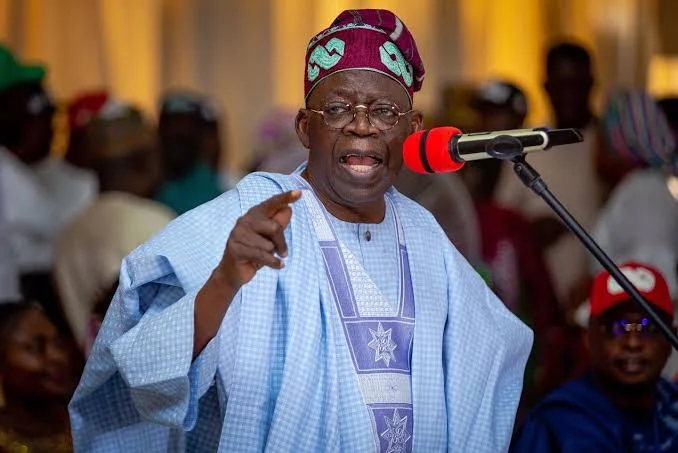
President Bola Ahmed Tinubu has proposed a massive allocation of ₦1.01 trillion to the Independent National Electoral Commission (INEC) in the 2026 Appropriation Bill, as preparations intensify for the 2027 general elections.
Details from the budget document submitted to the National Assembly show that INEC is earmarked ₦1,013,778,401,602, one of the highest allocations in the commission’s history, underscoring the scale and complexity of the forthcoming polls.
The 2026 budget proposal, valued at ₦58.18 trillion, is tagged “Budget of Consolidation, Renewed Resilience and Shared Prosperity”. It projects total revenue of ₦34.33 trillion and total expenditure of ₦58.18 trillion, including ₦15.52 trillion for debt servicing.
Analysts note that the hefty allocation to INEC reflects rising operational costs associated with elections, including procurement of technology, voter education, logistics, and nationwide deployment of personnel.
The Electoral Act 2022 mandates early release of election funds. Specifically, Section 3(3) provides that funds for general elections must be released to the commission not later than one year before the polls.
Recall that INEC has consistently stressed the importance of timely and adequate funding to guarantee credible elections.
In 2025, the National Assembly approved an upward revision of the commission’s budget, raising it to ₦140 billion from the initial ₦40 billion proposed by the Federal Government.
For the 2023 general elections, INEC spent ₦313.4 billion, although the commission disclosed that only ₦313.4 billion out of the ₦355 billion approved was released as of September 2023.
Historical data shows that Nigeria spent about ₦108.8 billion on the 2015 general elections, while the 2019 elections were conducted with ₦143 billion approved by the National Assembly.
Meanwhile, election experts project that the 2027 polls will be the most expensive in Nigeria’s history. Professor Bolade Eyinla, immediate past Chief Technical Adviser to the INEC Chairman, has estimated that the commission may require about ₦870 billion (approximately $600 million) to successfully conduct the elections.
Speaking at a Yiaga Africa retreat on election scenarios and manipulation risks in Abuja, Eyinla said Nigeria’s elections are among the largest peacetime civil operations globally, given the country’s vast population, terrain, and logistical demands.
He noted that Nigeria currently has over 93 million registered voters, 176,846 polling units, and 1,558 electoral constituencies, all of which significantly drive up costs.
According to him, previous election costs were ₦109 billion in 2015, ₦189 billion in 2019, and ₦355 billion in 2023. After adjusting for inflation, currency fluctuations, and operational expansion, he described the ₦870 billion projection for 2027 as realistic.
Eyinla also explained that on a per-voter basis, Nigeria’s election cost remains within international standards for transitional democracies, estimating about $6.72 per voter.
Comparative data shows that elections in Kenya, Ghana, South Africa, the Democratic Republic of Congo, Liberia, and India cost significantly more per voter in recent cycles.
With the 2027 elections approaching, stakeholders say efficient management of the proposed funds, transparency, and early release will be critical to ensuring credible, peaceful, and technologically driven polls.
Leave a Reply