
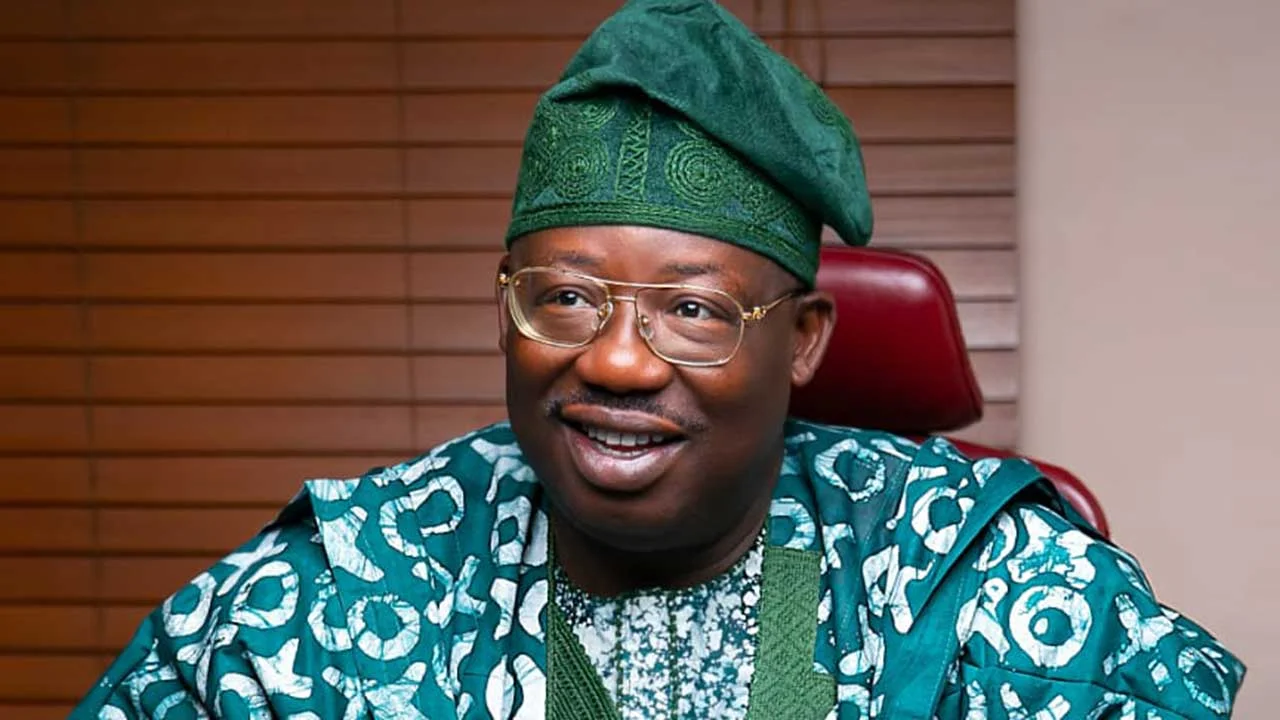
The Chairman of the Alliance for Economic Research and Ethics (AERE), Dele Kelvin Oye, has cautioned that Nigeria could face a fate similar to Venezuela if it continues to rely heavily on the United States and other foreign partners for economic and security support.
Oye warned that Nigeria’s rising recurrent expenditure, growing deficit financing, and dependence on external loans could expose the country to undue foreign influence, particularly in the event of loan defaults.
“If we are not careful with our current unrestrained, bloated government recurrent expenditures, borrowings and unnecessary reliance on IMF and World Bank prescriptions, the United States could easily use our current joint war on insurgency to treat Nigeria like Venezuela in the event of loan default,” he said.
The former chairman of the Organised Private Sector of Nigeria (OPSN) and current chairman of the Nigeria–Türkiye Business Council made the remarks in a policy paper entitled “After the Repo-Man Cometh: Nigeria’s American Romance and the Don-Row Doctrine of Asset Liquidation.”
In the paper, Oye described Nigeria’s current foreign posture as “dancing with the tiger,” warning that while foreign security assistance may provide short-term relief, it creates long-term structural vulnerabilities that undermine national sovereignty.
According to him, global power dynamics have shifted towards what he termed a “Repo-Man approach” to international relations, where creditor nations or powers could seek direct control over strategic assets when debtor countries default on obligations.
He cited the January 3, 2026 operation in Caracas as a wake-up call, stressing that Nigeria’s vast natural resources could make it vulnerable if fiscal discipline is not urgently enforced.
“Our resources are worth more than a quick fix. We must consciously avoid a scenario where Nigeria’s natural resources are painted as unrecovered property of external creditors,” Oye warned.
He further explained the concept of the “Don-Row Doctrine,” which he described as a modern evolution of the 19th-century Monroe Doctrine, noting that it represents a shift from indirect influence to direct intervention and asset control.
“The choice before Nigeria is clear: restructure our economy internally, reduce the cost of governance, increase transparency, and build a sovereign, self-reliant nation, or be restructured by external powers who view our resources as their fair price for repatriation,” he said.
Oye who is also an honorary life vice-president and former national president of the Nigerian Association of Chambers of Commerce Industry Mines and Agriculture (NACCIMA), concluded by urging Nigeria to reduce dependence on external borrowing from institutions such as the International Monetary Fund and the World Bank, and to pursue policies that promote internal economic resilience.
“Nigeria must be built by Nigerians for Nigerians; if not, we will be managed by others for themselves,” he added.
Leave a Reply