
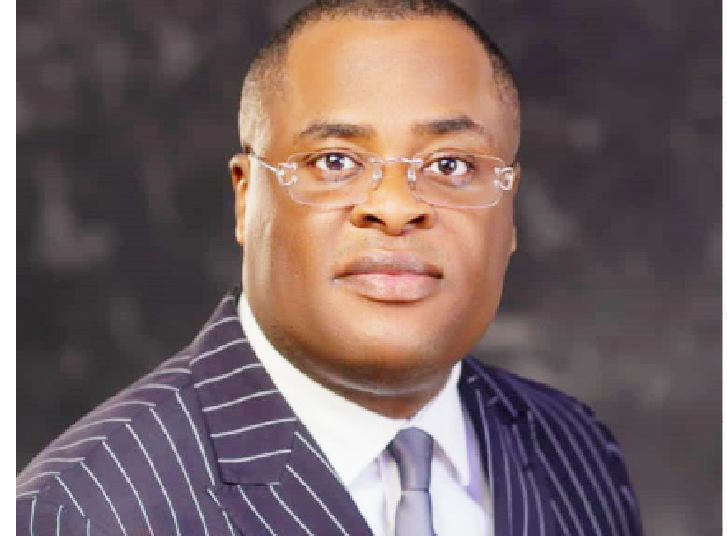
Hon. Paddy Iyamu, Edo State Commissioner for Education and Coordinator of the City Boy Movement in the state speaks with PATRICK OCHOGA on economic reforms, political developments, his alleged ambition for the National Assembly, and ongoing reforms in the education sector
As the Edo Coordinator of the City Boy Movement and the state’s Commissioner for Education, does your office address growing concerns about economic hardship and youth unemployment?
For me, when you believe in something, you must have clear and convincing reasons for that belief. I strongly believe that President Bola Ahmed Tinubu is doing very well under very difficult circumstances.
When a leader tells you he will remove a rotten tooth, you must understand that the process may be painful, but the healing that follows brings relief. The removal of fuel subsidies was controversial and painful.
However, the President made it clear during his inauguration that he would not continue a system that was draining the nation. At one point, the subsidy regime was described as “blood money” because it enriched a few individuals while the country suffered.
There were cases in which individuals allegedly presented import documents without the actual products and still received payments. That situation was clearly unsustainable. President Tinubu chose to confront the root causes of our economic challenges rather than postpone them.
Today, we are beginning to see results. The exchange rate, which rose above N1,800 at a point, has dropped to around N1,300. Fuel prices have also stabilised significantly. These are indicators that the reforms are beginning to yield results. Even respected industrialist Aliko Dangote recently expressed optimism that the naira could strengthen further.
The floating of the naira and the deregulation of the downstream sector have prevented vested interests from holding the government hostage. If, after two years, nothing had changed, I would have no reason to campaign for the President. But progress is visible. Beyond macroeconomics, look at infrastructure.
The coastal road project is visionary. For those of us who travel and see developments in cities like Dubai, we understand the importance of forward-thinking leadership.
Past administrations often patched roads; this administration is building infrastructure that will outlive it and transform economic activities. For Edo State, inclusion in these federal infrastructure plans will boost agriculture and trade by allowing farmers to move their goods easily.
In terms of youth empowerment, initiatives like NELFUND ensure that students no longer resort to negative activities to pay school fees.
Graduates also have access to business support programmes. Recently, the concession for young entrepreneurs was increased to 70 per cent. These interventions demonstrate that youth development is being taken seriously.
There was a recent incident in Benin involving ADC leaders, including Peter Obi and Chief John Oyegun, in which accusations were directed at your party and the governor. How do you respond to those claims?
From my standpoint, the governor has already issued a statement denying any involvement. It is also important to examine the internal issues within the ADC itself. Governor Okpebholo was in Abuja attending to national assignments at the time. If he was not even in the state, how can he be accused of orchestrating an attack on individuals whose presence was unknown to him?
Politics should not be about reckless accusations. The ADC should first address its internal challenges before pointing fingers at others.
There are speculations that you may contest for a National Assembly seat. How do you balance political ambition with your current responsibilities?
As a Nigerian, I have the constitutional right to aspire to any office I am qualified for. Yes, there has been growing pressure from supporters who believe that the reforms and partnerships we have attracted in one year could be expanded nationwide. We have secured federal interventions through agencies like NDDC and NELFUND.
We have introduced innovations and built partnerships that are repositioning education in Edo State. Some believe such initiatives could have a broader impact nationally. For now, I remain focused on my duties as Commissioner. At the appropriate time, any decision to be made will be announced. Governance comes first.
As Commissioner for Education, what measurable outcomes demonstrate improvement in the sector?
When we assumed office, we encountered significant challenges, including dilapidated buildings, poorly motivated teachers, contract staff without job security, and infrastructural decay in tertiary institutions.
Today, we have achieved over 91 per cent reconstruction and remodelling at the primary and secondary school levels. Many schools now have proper roofing, windows, and secure fencing.
The learning environment has improved dramatically. We discovered that at Useh Polytechnic, after 23 years of existence, there were no internal roads. It is the only state-owned polytechnic accessible to children from low-income families.
There were also salary backlogs dating back to 2022. We cleared the outstanding salaries and implemented the full minimum wage for lecturers.
At Ambrose Alli University, Ekpoma, poor internal road networks were addressed through a partnership with the NDDC, resulting in the construction of 11 kilometres of new roads.
Students who previously dropped out due to financial constraints have benefited from NELFUND interventions.
Today, no student in our tertiary institutions is sent home for lack of school fees.
Teacher development has also been a priority. We have trained hundreds of teachers in digital skills and robotics to align with global standards.
In partnership with Seplat, 620 teachers recently graduated from a quality improvement programme that also equips them with entrepreneurial skills.
Through collaboration with Google, we secured 800 training slots for students in digital certification programmes. The first batch will graduate next month, positioning them for opportunities in the global digital economy. We are also in discussions with Cisco to establish an academy in Edo State.
Additionally, I travelled to China last year to sign a technical partnership between a Chinese government university and Ambrose Alli University. Five students are already studying in China under this programme. We aim to expand this collaboration, particularly in technology and innovation.
The government cannot do everything alone. Strategic partnerships are essential for sustainable growth.
What accountability measures are needed to ensure the transparent use of education funds, especially in rural areas?
We do not simply disburse funds to schools. Instead, we directly execute infrastructure projects and provide human resources. We recognised that constructing buildings without teachers would be futile.
Therefore, in the first tranche of recruitment, we employed 500 teachers and an additional 100 for technical schools to address staffing gaps. We also reduced unnecessary financial transactions at the local level. Monitoring teams provide regular feedback on rural schools to ensure projects are properly executed and that resources are not misused.
We may not yet be where we want to be, but we are far from where we started. Our commitment is to continuous improvement, transparency, and delivering value to the people of Edo State.
Leave a Reply