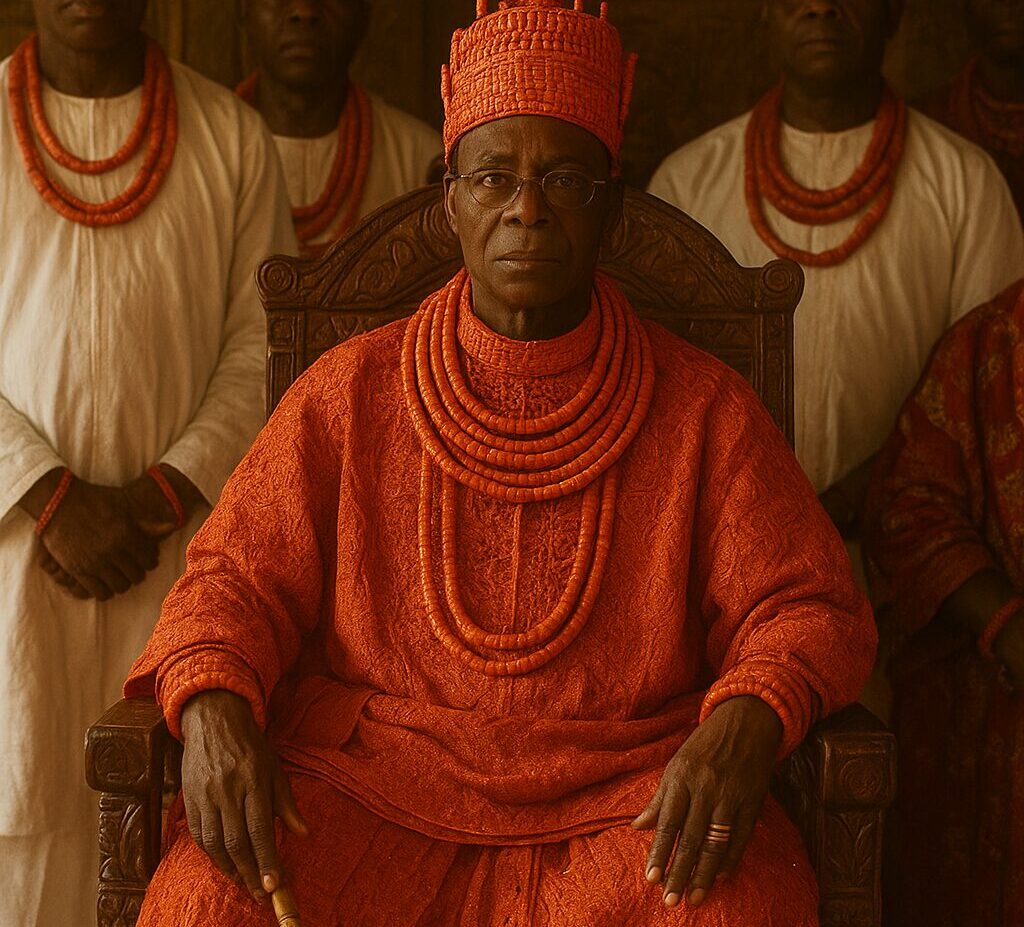
The Oba of Benin is more than a king — he is the heartbeat of Edo identity, the living custodian of a civilization that once stood as one of Africa’s most advanced empires. For centuries, the Benin throne has remained a sacred institution symbolizing unity, justice, and continuity among the Edo people.
Ancient Roots of the Obaship
The Benin monarchy dates back to the Ogiso dynasty, around 900 AD, when early rulers known as “Ogiso” governed the ancient Benin Kingdom. These rulers established the foundation of a centralized state long before European contact.
However, by the 13th century, the Edo people invited Prince Oranmiyan of Ife to restore order after a period of instability. He fathered Eweka I, the first official Oba of Benin — marking the beginning of the present royal lineage that continues unbroken today.
From Oba Eweka I to the current monarch, His Royal Majesty Omo N’Oba N’Edo Uku Akpolokpolo, Oba Ewuare II, the Benin throne has embodied not only political authority but also spiritual guardianship and moral leadership.
Spiritual Significance and Ancestral Authority
In Edo culture, the Oba is not merely a temporal ruler; he is the link between the living and the ancestors. The monarchy is deeply spiritual, blending governance with divine purpose. The Oba is believed to embody the collective spirit of past kings and serves as the earthly representative of the gods of the land.
Every ritual, from the Igue Festival to Ugie Erha Oba, reinforces this sacred connection — reminding the people that the kingdom’s prosperity depends on maintaining peace with the ancestors and the gods.
His palace, an architectural masterpiece in Benin City, stands as a living museum — filled with bronze plaques, ivory carvings, and coral artifacts that chronicle Edo history and artistry.
Coronation and Royal Duties
The coronation of an Oba of Benin is one of the most elaborate cultural events in Africa. It begins after the passing of an Oba, with sacred rites performed by chiefs, priests, and royal family members. The crown prince, known as the Edaiken N’Uselu, undergoes spiritual purification before ascending the throne.
Upon coronation, he receives the Ada (royal staff) and Eben (ceremonial sword), symbols of authority and justice. Traditional chants and blessings affirm his new role as the protector of Edo land and the spiritual father of the people.
Beyond rituals, the Oba’s duties include promoting peace, adjudicating cultural disputes, safeguarding Benin heritage, and representing Edo interests nationally and internationally.
Preserving Culture in a Modern World
Despite modernization, the Oba’s influence remains unshaken. Oba Ewuare II, enthroned in 2016, has been instrumental in promoting education, tourism, and cultural revival in Edo State. He has modernized palace communication, encouraged youth empowerment, and worked with global institutions to repatriate stolen Benin bronzes — the sacred artworks looted during the 1897 British invasion.
His reign blends tradition with progress, ensuring that Edo culture thrives in the 21st century without losing its soul.
The Oba’s strong stance against human trafficking, illegal migration, and social vices has earned him both local and international recognition.
Symbol of Unity and Moral Leadership
In times of political division or social unrest, the Oba’s palace becomes a beacon of unity. Edo people, regardless of religion or political affiliation, see the Oba as a father figure whose words carry moral weight and divine authority.
When the Oba speaks, it resonates deeply — reminding citizens of their shared ancestry and responsibility to protect their heritage.
This spiritual reverence transcends politics. His presence at cultural events, weddings, and traditional ceremonies often draws thousands, symbolizing the undying respect the people hold for their monarch.
Legacy That Lives Forever
The Obaship is not just an institution — it’s a living memory of a proud people who once built one of the most sophisticated empires in precolonial Africa. The Oba stands as a reminder that Edo civilization is not lost but evolving.
From ancient diplomacy with Europe to global recognition today, the Benin throne continues to shape perceptions of African royalty, dignity, and resilience.
Indeed, to understand the Edo people is to understand their Oba — a figure of wisdom, strength, and divine stewardship whose legacy will forever guide generations to come.
Leave a Reply