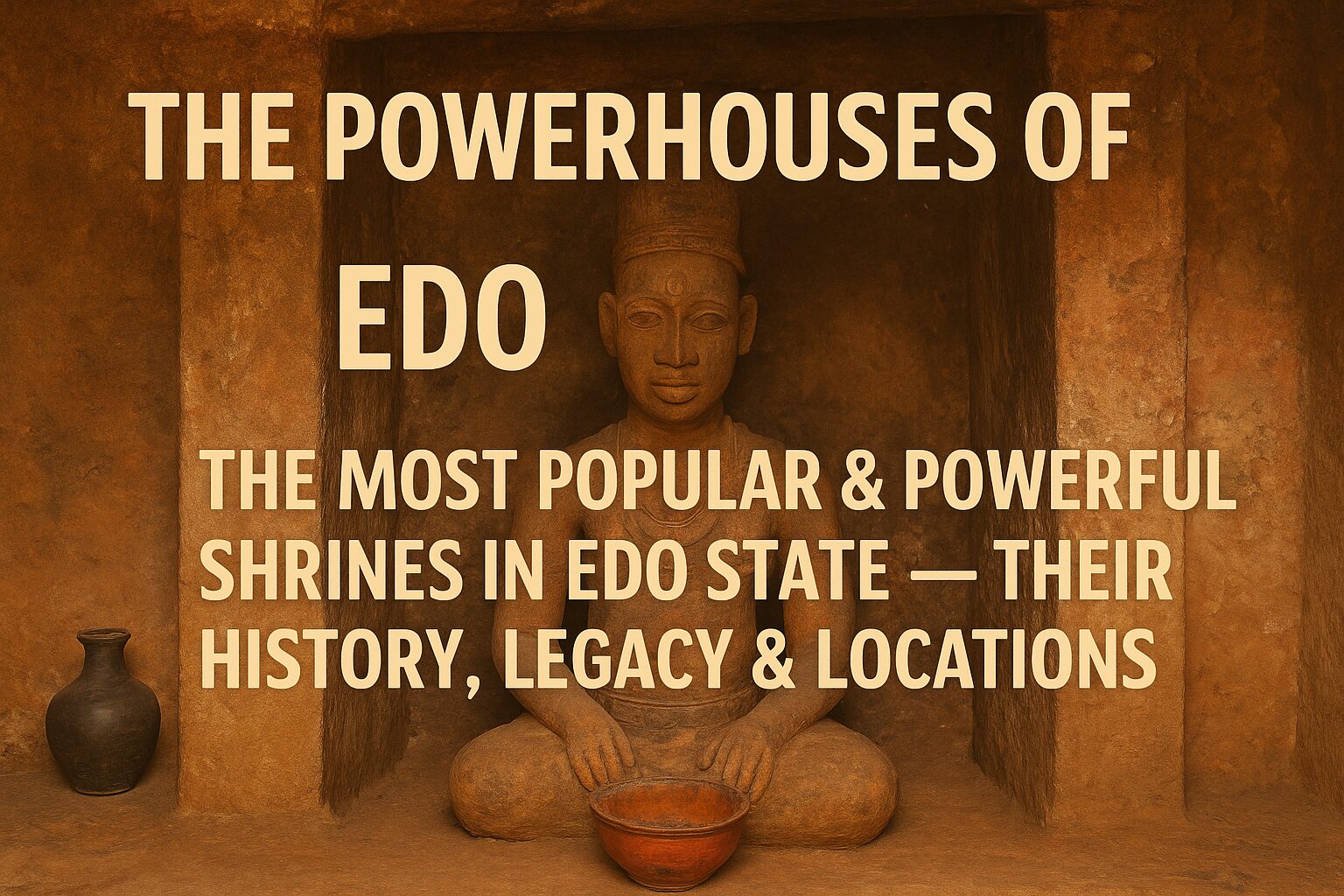
Edo State is home to one of Africa’s richest spiritual and cultural civilizations — the ancient Benin Kingdom. Beyond the bronze artworks and royal festivals, shrines play a central role in preserving centuries-old traditions. Some shrines are tied to the royal palace, others to powerful deities, and many are community-based guardians of law, prosperity and protection.
This article explores the most popular and powerful shrines in Edo State, backed by historical fact-finding, oral tradition, and cultural documentation. These shrines remain active symbols of identity, spirituality and continuity for Edo people.
1. Olokun Shrine — The Shrine of Wealth, Water & Deep Mysteries
Location: Spread across Benin City, coastal Edo communities, and historically linked to Urhonigbe.
The Olokun Shrine is one of the most respected and widespread in Edo culture. Olokun — the deity of the deep sea, wealth, fertility, and purity — is worshipped through both communal shrines and private altars in noble households.
History & Legacy
-
Olokun worship predates colonial records and remains central to Edo cosmology.
-
Traditional clay vessels, carved figures, and white chalk form the sacred symbols of the shrine.
-
Oral and historical sources connect Olokun to prosperity, royalty, and protection for traders and families.
-
Many shrines are still active, maintained by priestesses and lineage heads.
Olokun shrines are among the most visited by those seeking blessings, breakthrough, fruitfulness, peace, and spiritual cleansing.
2. Ovia Shrine — The Shrine of Peace, Justice & Social Order
Location: Benin City and surrounding Edo communities that celebrate the Ovia Festival.
The Ovia Shrine honors Ovia, a powerful female deity symbolizing peace, covenant, justice, and prosperity. Her story — a tale of innocence, betrayal, transformation, and divine elevation — is a major part of Benin oral history.
History & Legacy
-
Ovia’s narrative is connected to the moral fabric of the Benin Kingdom.
-
Her shrine and festival regulate important cultural laws and community ethics.
-
Traditionally, parts of the festival are gender-restricted, highlighting the shrine’s sacredness.
-
The shrine remains one of the most spiritually feared and respected in Edo State.
Ovia’s blessing is often sought for peace in families, fairness in disputes, and community harmony.
3. The Royal Palace Shrines — Ancestral Altars & the Spiritual Heart of the Kingdom
Location: Oba’s Palace, Benin City.
Inside the ancient Royal Palace of the Oba of Benin lies a network of powerful and historic shrines. These shrines are central to royal rituals, governance, and ancestral remembrance.
History & Legacy
-
Includes shrines for past Obas, warrior ancestors, guild protectors, and spiritual guardians.
-
The Igue Festival, a yearly renewal ritual, centers on blessings performed at these shrines.
-
Ritual objects like bronze heads, ivory tusks, and ancestral altars reflect deep heritage.
-
Palace shrines connect Edo people to centuries of leadership, continuity, and divine guidance.
These shrines are highly restricted and represent the spiritual, cultural, and political authority of the Benin Kingdom.
4. Ake Shrine & Local Lineage Shrines — Guardians of Community History
Location: Idumowina Quarters, Benin City, and other Edo villages.
Shrines like Ake represent Edo’s vast network of lineage, family, and community shrines. Though less globally famous, they are powerful in local governance, oath-taking, conflict resolution, and ancestral remembrance.
History & Legacy
-
These shrines protect towns and families from misfortune.
-
They are used in local festivals, community meetings, and spiritual cleansing rites.
-
Many hold relics, chalk drawings, carved objects, and sacred groves passed down through generations.
Ake and other lineage shrines are trusted because they are directly tied to ancestral guardianship.
5. Specialized Guild & War Shrines — Protectors of Warriors, Craftsmen & Institutions
Location: Benin traditional quarters, palace precincts, and ancient guild communities.
Throughout Edo State, different professional guilds — warriors, smiths, hunters, woodcarvers — maintain their own shrines. These shrines offer protection, inspiration, and spiritual authority.
History & Legacy
-
War shrines preserved the bravery, secrecy, and rituals of ancient Benin warriors.
-
Craft shrines blessed blacksmiths, bronze casters, carvers, and palace guild members.
-
They played roles in oath-taking, initiation, and guild festivals.
-
Today, some still operate within cultural quarters like Igun Street (bronze casters).
These shrines are vital for understanding the technical mastery, discipline, and sacred skills of Edo guilds.
Why These Shrines Matter Today
Edo shrines are living cultural archives — they preserve language, art, stories, values, and community identity. They attract both traditional followers and heritage researchers interested in the survival of precolonial African spirituality.
Even in modern times, shrines remain important for:
-
Community peace
-
Ancestral remembrance
-
Cultural festivals
-
Historical education
-
Spiritual protection
They are not relics — they are active spiritual institutions.
Leave a Reply