
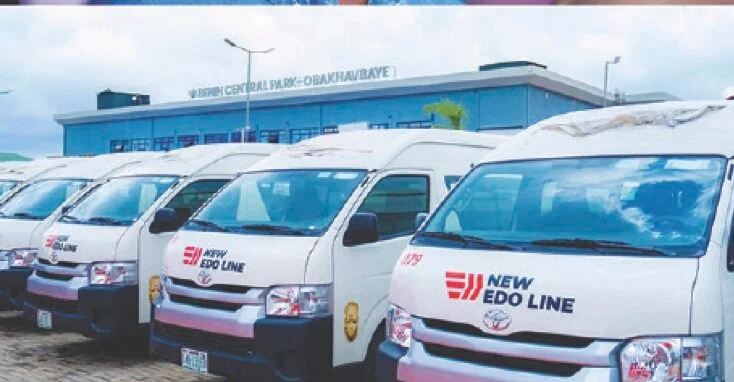
The roar of engines at the New Edo Line terminals signals more than just a return to the roads—it marks a monumental shift in the economic trajectory of Edo State.
Under the leadership of Governor Monday Okpebholo, the state is experiencing a strategic transport reform that goes beyond mobility. It is about reclaiming a lost heritage to drive a modern commercial revival.
For a state that serves as Nigeria’s vital “gateway,” connecting the South-West, South-East, and the North, transportation is the heartbeat of survival. By prioritizing this sector, the Okpebholo administration is directly strengthening the primary artery of Edo’s economic life.
The centerpiece of this transformation is the revival of the New Edo Line. After nearly fifteen years of dormancy, the administration has reinvigorated the institution with 100 brand-new buses. This is a calculated economic intervention rather than a cosmetic upgrade.
By reopening key inter-state and intra-state routes, Governor Okpebholo has directly addressed the “logistics premium” that previously hindered local traders. These reforms drive the SHINE agenda—Security, Health, Infrastructure, Natural Resources, and Education, ensuring that goods and people move safely and affordably across the state’s strategic corridors.
To appreciate the significance of this revival, one must recall the foundation that once made Edo a national leader.
The original Edo Line was established in 1968 as the Midwest Line by the late visionary Dr. Samuel Osaigbovo Ogbemudia. For decades, it was the gold standard of public service in Nigeria, a nationally recognized brand that served as the lifeline for students, civil servants, and the legendary traders of Edo State. Its collapse over a decade ago created a void, spiking travel costs and stifling the movement of goods.
Governor Okpebholo’s reforms do more than revive history; they honor it by adapting Ogbemudia’s pioneering spirit to the demands of the 21st-century marketplace.
The impact on Edo’s business environment is already visible. Improved logistics efficiency and reduced transport costs are boosting Small and Medium Enterprises (SMEs), providing more predictable supply chains and faster access to regional markets.
Affordable public transport also reduces the overall cost of living. When fares drop, disposable income rises, directly stimulating local demand for products and services. Beyond commuters, the revival has reactivated a massive employment ecosystem, supporting mechanics, spare-parts vendors, and terminal-based small businesses that had long been displaced.
Infrastructure is a language investors understand. By reviving a brand as prestigious as Edo Line, the Okpebholo administration has sent a clear message: Edo State is open for business. No longer a mere bypass for travelers, the state is becoming a functional, mobile hub where the cost of doing business is actively driven down by smart governance.
The rebirth of Edo Line proves that under Governor Monday Okpebholo, Edo State is no longer stagnant. Markets are reopening, routes are active, and the economy is back in motion, bridging the gap between a glorious past and an innovative future.
Leave a Reply