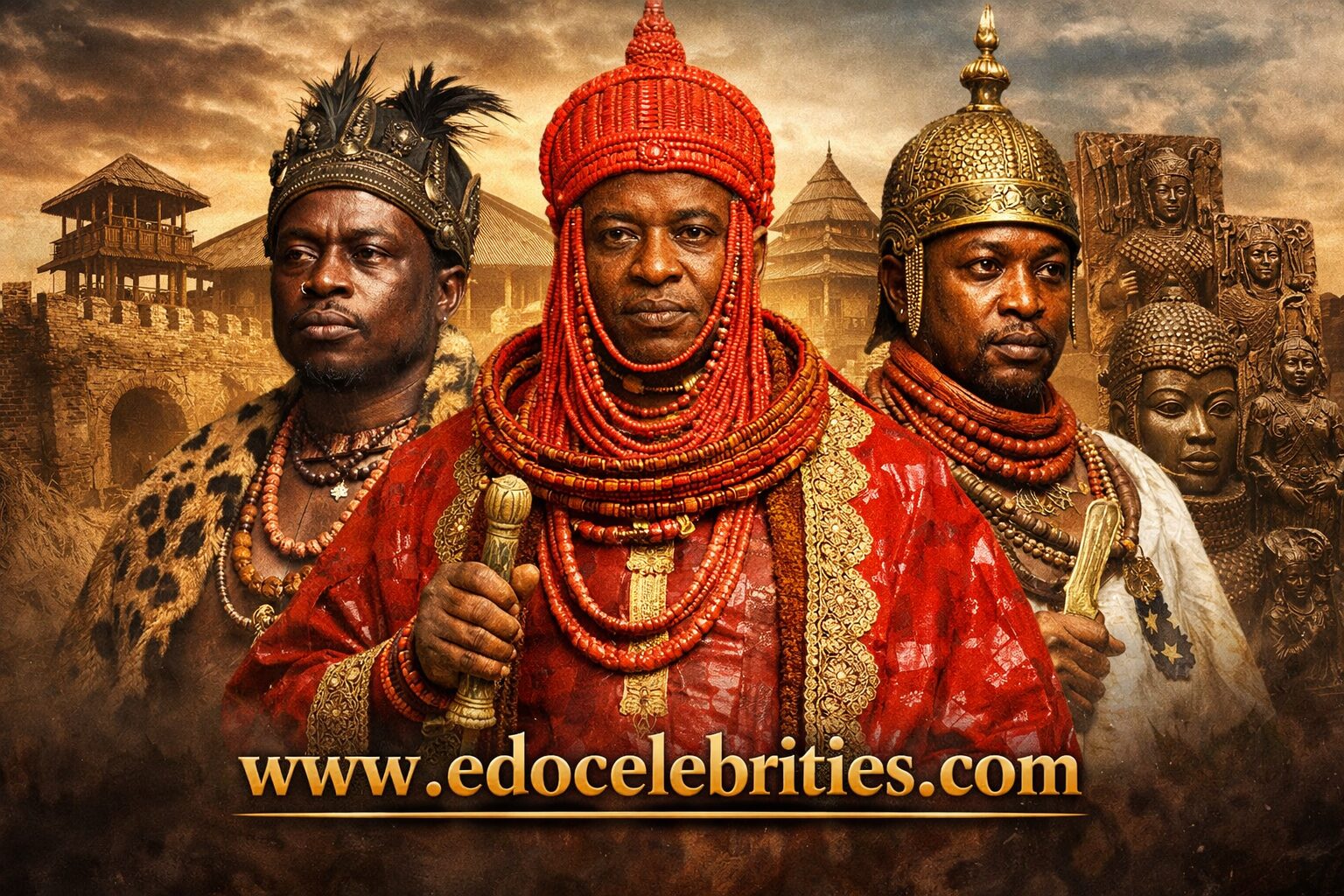
The Kingdom of Benin, one of West Africa’s oldest monarchies, has been ruled by a long line of Obas (kings) whose accomplishments shaped history, culture, governance and arts in the region. Below is a curated list of some of the most influential Obas and what they are best known for.
1. Eweka I (c.1180–1246) — Founder of the Oba Dynasty
Oba Eweka I is recognised as the first Oba of Benin, laying the foundation for the dynasty that endures to this day. His reign marked the beginning of centralized chieftaincy and royal lineage authority in Benin.
2. Ewedo (c.1260–1280) — Lawgiver and Reformer
Oba Ewedo is remembered as one of the wisest early Obas. He implemented key laws, established the kingdom’s first prison, and reorganised ceremonial and state structures, including rituals that linked future Obas to ancestral legitimacy.
3. Oguola (c.1280 AD) — Fortress Builder
Oba Oguola fortified Benin by constructing the first earthwork moats around Benin City to protect against invasions. He also encouraged the formal organisation of the bronze casting guilds that later produced the famed Benin Bronzes.
4. Ewuare the Great (1440–1473) — The Cultural Transformer
Perhaps the most celebrated of all Obas, Ewuare I, known as Ewuare the Great, fundamentally transformed Benin:
-
Rebuilt Benin City into a thriving, well-planned metropolis.
-
Introduced royal coral beads and scarlet cloth (Benin’s royal colours).
-
Expanded the kingdom’s territory and power through political reform.
-
Promoted arts, crafts and established the Igue festival, a major cultural event.
His reign is widely regarded as Benin’s golden age of governance, culture and artistic excellence.
5. Ozolua the Conqueror (1483–1504) — Warrior King
Oba Ozolua was known as the Conqueror for his strategic military campaigns that expanded Benin’s reach to the Niger Delta and beyond. He also opened sustained diplomatic and trade contact with Portuguese explorers.
6. Esigie (1504–1550) — Military Strategist and Cultural Pioneer
Oba Esigie further consolidated the kingdom’s power with notable milestones:
-
Successfully battled external enemies, including the Igala.
-
Instituted centralised governance and taxation systems.
-
Encouraged and patronised arts, giving rise to iconic bronze and ivory masterpieces.
-
Created the title of Iyoba (Queen Mother) and installed his mother, Idia, as its first holder.
Esigie’s reign is often cited as one of Benin’s most culturally influential periods.
7. Orhogbua (1550–1578) — Educated Ruler
Oba Orhogbua was among the earliest Benin kings educated by the Portuguese and maintained diplomatic ties. He also strengthened military presence by establishing strategic war camps and trade controls.
8. Ovonramwen (1888–1914) — Last Pre-Colonial Oba
Oba Ovonramwen was the last independent ruler before the British Punitive Expedition of 1897, which led to the sacking of Benin City and looting of priceless cultural artifacts — many of which became the world-famous Benin Bronzes.
9. Eweka II (1914–1933) — Restorer After Destruction
After colonial disruption, Oba Eweka II rebuilt the traditional palace, restored craft guilds, commissioned replacements for looted works, and established the Benin Arts and Crafts School to preserve cultural heritage.
10. Akenzua II (1933–1978) — Advocate for Education and Cultural Revival
Oba Akenzua II championed modern advancement for his people:
-
Promoted western education.
-
Championed the return of looted Benin Bronzes.
-
Opened the Benin Divisional Council Museum and boosted cultural pride and preservation.
11. Ewuare II (2016–Present) — Modern Custodian of Heritage
The current Oba, Ewuare II, continues to assert the kingdom’s cultural identity by advocating for the return of Benin Bronzes from museums abroad and strengthening heritage preservation efforts.
Legacy of the Oba Dynasty
The Obas of Benin have not only ruled but moulded a kingdom known for its:
-
Artistic excellence (Bronze plaques and sculptures celebrated globally).
-
Political sophistication (administrative systems and centralised governance).
-
Cultural traditions (festivals, coronation rites, royal regalia).
-
Resilience through colonial disruption and modern restitution movements.
Today, the Oba remains a revered cultural symbol, bridging centuries of heritage with contemporary identity.
Leave a Reply