
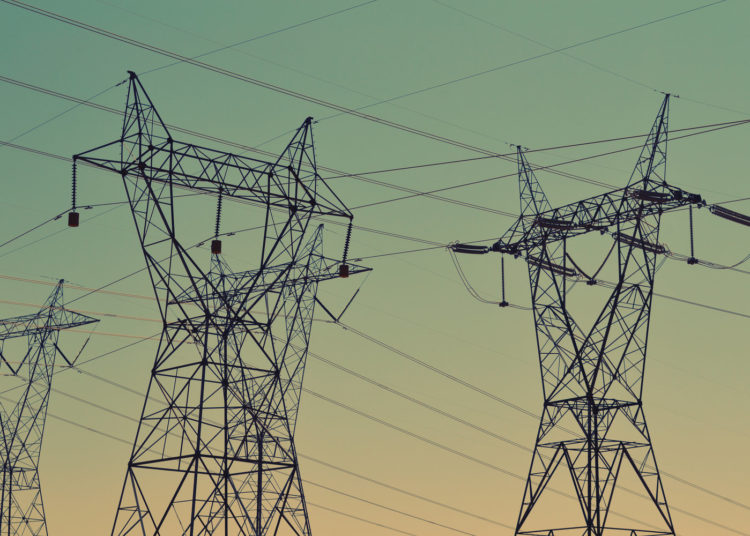
As power generation capacity continues to shrink, electricity sector workers have reiterated their call for an overhaul of the power sector privatisation exercise, which, over 13 years post-privatisation, has failed to yield a significant improvement in the quantum of power generated and distributed across the country.
The National Union of Electricity Employees (NUEE) blamed Nigeria’s persistent power shortages on the failure of the country’s privatised electricity system, urging the federal government to review the entire process to address worsening supply challenges.
This comes as key industry analysts and consumer groups have called for broader policy reforms to enable institutional reforms that will lead to sectoral efficiency.
Acting general-secretary of NUEE, Dominic Igwebike, made the remarks in an exclusive interview with LEADERSHIP, where he dismissed claims that the current electricity shortages are linked to global geopolitical tensions.
The labour leader noted that Nigeria has continued to experience erratic electricity supply despite successive tariff increases and reforms in the power sector, following the sector privatisation between 2012 and 2013, with expectations that private investors would improve generation, transmission and distribution capacity.
Igwebike said more than a decade after the handover to private operators, the sector has failed to record meaningful progress, noting that generation capacity and infrastructure remain weak.
He argued that the country’s national grid has continued to suffer operational challenges, while the absence of clear government plans has compounded the crisis.
The labour leader also criticised frequent tariff increases, saying Nigerians are paying more for electricity without corresponding improvements in supply.
He stressed that reliable electricity remains critical to economic development, warning that no country can achieve meaningful industrial growth without stable, affordable power.
Igwebike further called for a comprehensive energy strategy that would include investment in renewable energy sources and improved power infrastructure to meet Nigeria’s growing electricity demand.
He said, “The current epileptic supply shows that the private sector has failed. Since after privatisation in 2012 and 2013, there has been no additional megawatt and there has been no improvement in the sector.
It is not just because of the Iran-U.S. war that is causing the epileptic supply of power. There have been tariff increases, but what has been done earlier to improve the sector? There has been no foreign direct investment, and the generation network is poor.
The grid system is not working. That is the truth. The system is not working and there is no clear government plan, whether mid-term, long-term or short-term, to address the challenges.
The only solution now is to go back and review the entire privatisation process, because the system has failed. There are no countries that develop without electricity.”
Consumer Groups, Stakeholders Seek Institutional Reforms
Major stakeholders who spoke with LEADERSHIP said the only pathway to achieving efficiency and transparency is a total overhaul of the entire industry value chain, with the automation of the critical components of the Generation, Transmission, and Distribution subsystems.
Speaking on the latest shortfall in generation capacity, Kunle Olubiyo, President of the Nigeria Consumer Protection Network (NCPN), advocated modernising and automating Nigeria’s power sector to address chronic inefficiencies, frequent grid collapses, and energy poverty.
Speaking with our correspondent, Olubiyo, contended that unless an automation system is put in place, human elements will continue to create systemic problems, especially in debt calculations and energy consumption across the Generation, Distribution, and Transmission networks.
He said reform should take into cognisance technology to overhaul the sector’s ageing, largely manual, and inefficient infrastructure.
Olubiyo also urged the government to invest heavily in Supervisory Control and Data Acquisition (SCADA) systems, which are vital for real-time monitoring and control of the transmission grid.
He highlighted the need for automated “black start” equipment and improved spinning reserves to manage system disturbances and prevent, or recover from, total or partial grid collapses.
He further called for the use of technology for mechanical vegetation control along transmission lines, reducing reliance on manual efforts that are slow and ineffective against grid encroachment, and added that the power sector needs to move beyond obsolete equipment and embrace digital tools to align with international best practices.
Olubiyo’s advocacy is part of a broader call for technical, operational, and structural improvements in the Nigerian Electricity Supply Industry (NESI) to ensure a stable and reliable electricity supply.
He also called on the government to revisit the Nigerian Electricity Regulatory Commission (NERC) metering and telemetering programme across the Nigerian Electricity Supply Industry (NESI), which aims to reduce billing inaccuracies, eliminate meter bypass, and improve revenue assurance.
He wondered why the lofty initiative was bungled and warned that until political interference in the system is eliminated, the sector will continue to suffer inefficiencies.
Under NERC’s telemetering and metering initiative, effective from January 22, 2025, the regulator introduced strict fines for meter tampering and bypass to encourage compliance and curb energy theft.
The NERC has been verifying data from Electricity Distribution Companies (DisCos) regarding the metering of maximum demand customers, aiming to enforce penalties for non-compliance with metering deadlines and has solicited proposals for “metering optimisation” to enhance the impact of the Meter Asset Provider (MAP) and National Mass Metering Program (NMMP) policies, which involve exploring options like running both programs simultaneously or increasing the role of MAP participants.
As of early 2026, the Federal Government, under NERC’s regulatory oversight, announced that smart meters procured under the World Bank-funded DISREP program must be provided to consumers free of charge and installed.
These measures are part of a broader effort to ensure that the power sector’s metering infrastructure is improved, reducing reliance on estimated billing and enhancing technical efficiency, as highlighted by the need for telemetering
In her reaction, Mrs Sola Salako Ajulo, founder of Consumer Advocacy Foundation of Nigeria (CAFON), said the consumer’s right to information is clearly being violated as the authorities are not offering proper explanations as to why the power generation is dropping drastically.
Ajulo said the situation improved months ago, then significantly deteriorated, and the buck-passing between the GenCos and gas suppliers is frustrating consumers.
She said even when the services are poor, consumers are meant to pay for services not rendered.
Ajulo said consumers are getting frustrated due to either the system’s ineptitude or inefficiencies.
She said no one could really identify where the problem is actually coming from, but by and large, Nigerian consumers are paying the price.
reports that gas supply shortages affecting thermal power plants, which generate the majority of the country’s electricity has significantly impacted Nigeria’s electricity supply system.
The drop, which started late last year when there was an explosion at Escravos-Lagos gas pipeline on December 10, disrupted operations of some power plants. The issue was fixed after about two weeks, and minimal supply was restored until in January, when the issue of the Federal Government debts to GenCos surfaced again.
Power generation companies (GenCos) which operate thermal power plants that use natural gas to produce electricity and connect their power plants to the national grid, allowing them to transmit generated electricity to the Transmission Company of Nigeria (TCN) for distribution and sell electricity to the Nigerian Bulk Electricity Trading (NBET) Plc, which acts as a creditworthy off-taker, ensuring payment to Generation Companies.
The money owed to the GenCos reportedly rose to over ₦6 trillion as at early 2026, which was further complicated by the alleged debate that recently emerged between GenCos and the FG over the actual amount owed.
Also, the recently-triggered and ongoing Israel/US—Iran War has also caused immediate scarcity of and spike in prices of petroleum products, further complicating the issue in the Nigeria’s energy sector. Nigeria’s power sector relies heavily on gas-fired plants, which supply more than 70 per cent of electricity on the national grid.
Recent operational reports from the Nigerian Independent System Operator (NISO) show that national generation has dropped significantly because thermal plants are receiving less than half of the gas required to operate optimally.
For instance, thermal power plants require approximately 1,588.61 million standard cubic feet of gas per day to operate optimally. However, only about 652.92 million standard cubic feet have been available in recent periods. This severe shortfall has forced several generating units to shut down or operate below capacity, thereby resulting in a significant reduction in electricity available on the national grid.
In February, as a result of these gas challenges and its effects, national electricity generation dropped to around 4,300 megawatts, far below demand and also recent shutdown of some more units caused a further reduction of about 292MW in available generation on the grid, thereby reducing the electricity available for transmission to distribution companies nationwide.
Grid operators have had to implement load shedding nationwide to maintain system stability. This ongoing load-shedding and maintenance works on major transmission lines (including the Mando-Shiroro transmission line) have significantly affected transmission nationwide.
Since all Distribution Companies depend on the same national grid, the reduction in generation (occasioned by gas supply shortage) automatically translates to reduced allocation to every state and every distribution company across Nigeria.
While these challenges persists, some gas suppliers appear indifferent about claims in supply challenges.
A source close to the supply chain structure, absolved gas suppliers of not meeting their obligations.
The source, referred to Seplat Energy Plc, which in partnership with the Nigerian National Petroleum Company Limited (NNPC), successfully scheduled and executed routine maintenance on its major gas production facilities.
The maintenance took place from February 12 to February 15, 2026, and was designed to ensure the long-term safety, reliability, and efficiency of the critical gas infrastructure.
The four-day exercise was part of standard industry safety and asset integrity protocols to enhance performance and reduce the risk of future unplanned outages.
The maintenance initially caused a temporary reduction in gas supply to the NNPC Gas Infrastructure Company Limited (NGIC) pipeline network, which affected some gas-fired power plants and slightly lowered electricity output.
To minimize disruption, the NNPC Gas Marketing Limited (NGML) engaged alternative suppliers to maintain network stability.
On its part Heirs Energies spokesperson Chidinma Ugbojiaku, in a response to LEADERSHIP inquiry said, “Our power customers are up and running, we do not have issues with the gas supply.”
Following the distress in the power sector, industry leaders have estimated that over 40 million MSMEs nationwide are trapped in a prolonged crisis of low energy transmission and frequent power outages, disrupting business models across value chain, from food processing, manufacturing, and particularly the SMEs, from welding to tailoring, laundry services and indigenous bakery business.
States most affected by power outages and unstable supply include Lagos, Ogun, Oyo, Osun, Ekiti, Delta, Rivers, Cross River and Edo, according to findings by LEADERSHIP.
Despite limited supply, many consumers reported being subjected to steep estimated bills. In Magboro, Ogun State, resident Taiwo Solanke said prolonged blackouts had plunged small businesses into crisis, with some areas experiencing months without electricity.
A laundry operator in Ogba, Lagos, said he spends about ₦8,000 daily on fuel to power his generator, yet continues to receive high bills from Ikeja Electricity Distribution Company for power not consumed.
Similarly, Sophia Akodu, a resident of Ojodu Berger, lamented that her household now pays over ₦100,000 monthly despite not enjoying 24-hour supply.
“We are paying for electricity we don’t use, and nobody holds the power companies accountable,” said barber Mike Uweru, who now relies on rechargeable clippers to cut costs.
The cumulative effect has been business closures, layoffs and rising informality. According to Association of Small Business Owners of Nigeria (ASBON), electricity-dependent businesses have been hit hardest.
Speaking in a Media chat to Leadership, National President Association of Small Business Owners of Nigeria (ASBON) President, Dr. Femi Egbesola said operators of cold rooms, welding workshops and small manufacturing outfits are increasingly unable to cope with power outages as SMEs struggle to power their businesses.
“Once they buy diesel, there is no profit left,” he said. “If there is no electricity, they cannot operate. About 10 per cent of businesses have closed in the last year.”
He warned that most micro and small enterprises cannot afford alternatives such as solar, gas or inverters, unlike larger firms that can pass costs to consumers.
“The result is rising prices, higher inflation, and more unemployment and declining investor confidence,” Egbesola said.
In Ogun State, MSMEs reported similar struggles. Isioma Okonkwo, a Tailor, said rising energy costs forced her to let go of trainees, while ice block producer Monday Ajayi said tariff hikes bore no relationship to supply. This is as he was billed ₦40,091.43 in February 2026, and ₦48,572 in March despite unstable power supply.
“I relocated my freezers to an area with better electricity, but transport costs are high and ice melts before reaching customers,” he said.
Chibueze Ezeala, a Welder, said the combined burden of tariffs and fuel costs has become unbearable, calling for urgent government intervention.
The Manufacturers Association of Nigeria (MAN) strongly criticized frequent electricity tariff hikes in 2026, warning they undermine manufacturing competitiveness and SME survival.
MAN Director General, Segun Ajayi-Kadir, said power sector privatization has failed to deliver reliable electricity, while costs continue to rise. He noted that Band A tariffs increased by over 200 per cent, sharply inflating production costs.
Ajayi-Kadir also highlighted surging borrowing costs, with average lending rates rising from 28.06 per cent in 2023 to about 35.5 per cent in 2024, pushing total finance costs for manufacturers to ₦1.3 trillion and stifling capital expansion.
He alluded that the Micro, Small and Medium Enterprises, (MSMEs) are persistently constrained by power outages orbiting around the Sector, reinforcing a hostile operating environment for the country’s largest employer of labour.
Across the year, tight monetary conditions pushed lending rates to punitive levels, weakened cash flows, and limited access to credit for small businesses already grappling with rising input costs, fragile consumer demand and structural infrastructure gaps. For millions of MSMEs, survival, not expansion, became the overriding priority. He said
Beyond financing, structural bottlenecks remained entrenched. The CBN survey shows that insecurity topped the list of business constraints nationwide with an index score of 70.1, highlighting the cost of security risks on production, logistics and investment decisions.
High or multiple taxation followed at 69.7, reflecting long-standing complaints by business owners over overlapping levies imposed by federal, state and local governments. Insufficient power supply ranked third at 69.3, reinforcing the centrality of electricity challenges to Nigeria’s MSME crisis.
Taken together, these constraints continue to erode competitiveness and discourage formalisation, particularly among micro and informal enterprises.
For artisans, informal traders and micro businesses, unreliable electricity supply was the most visible and immediate threat to livelihoods in 2025.
Across Lagos, Ogun and other commercial hubs, MSMEs reported severe disruptions caused by prolonged outages, high electricity tariffs and the rising cost of alternative power sources. Many operators were forced to rely on petrol and diesel generators, solar inverters and batteries, options that significantly inflated daily operating expenses amid weak revenues.
At the Ajuwon/Akute Market in Ifo Local Government Area of Ogun State, frozen food seller, Toyin Adeyeye, described months of losses driven by erratic power supply.
“We have no power to chill drinks, preserve frozen food or run cold rooms,” she said. “Cartons of chicken, fish and prawns spoiled within a week. Some traders survived with generators or solar, but many went into serious debt.”
Similar accounts emerged from Alagbole, Denro, Akute and other MSME clusters, where artisans complained of dwindling sales, bad debts and shrinking inventories.
Leave a Reply