
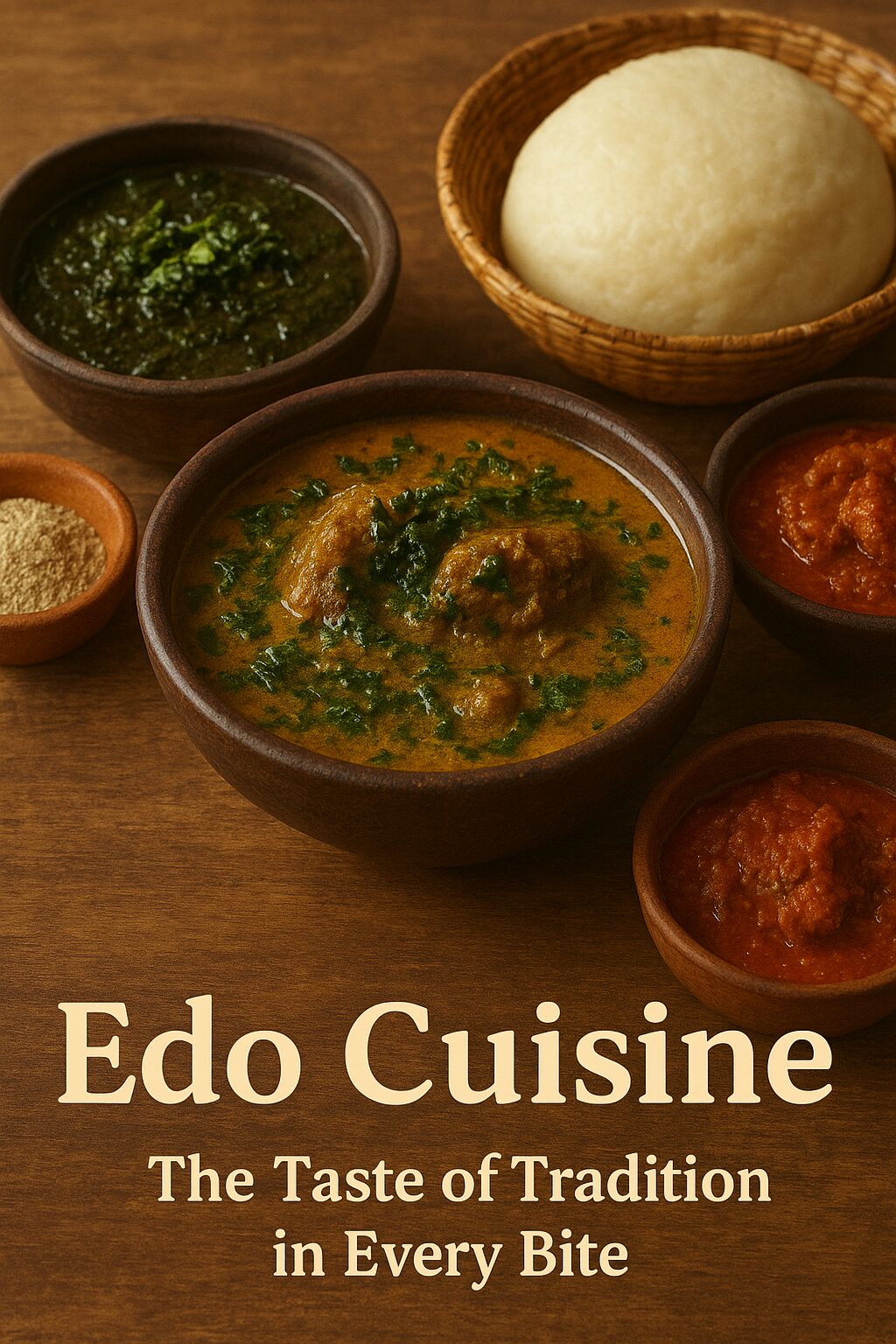
The Edo people, known for their rich culture and heritage, also take immense pride in their traditional cuisine. Each meal tells a story — one of identity, history, and togetherness. Edo food is more than just nourishment; it’s a cultural symbol that ties generations together. From festive Owo soup to the medicinal black soup, every dish represents centuries of culinary mastery passed down through families.
Owo Soup — The Pride of Edo Celebrations
Owo soup holds a special place in Edo culture, often served at weddings, festivals, and naming ceremonies. Its preparation is both spiritual and communal, reflecting unity and joy.
Made with palm oil, blended pepper, crayfish, potash, and sometimes smoked fish or goat meat, Owo soup is thick, bright, and flavorful. Traditionally, it’s eaten with starch or yam, symbolizing prosperity and good fortune.
In many Edo homes, no celebration is complete without a steaming pot of Owo soup. Elders often say, “If Owo soup is not served, the event is not complete.”
Black Soup — Nature’s Gift to the Edo People
Known locally as Omoebe or Omoegho, black soup is another iconic dish of the Edo people. Its distinctive dark color comes from a blend of bitter leaves (onugbu), scent leaves (efirin), and uziza leaves, all rich in nutrients.
These leaves are ground and simmered with palm oil, pepper, crayfish, and assorted meat or fish, creating a taste that’s both earthy and aromatic. Beyond its flavor, black soup is considered medicinal, helping with digestion and cleansing the system naturally.
It’s commonly eaten with pounded yam, starch, or fufu — making it a comforting meal for both the young and old.
Starch — The Perfect Companion
No talk of Edo cuisine is complete without starch, the golden, elastic side dish made from cassava. It’s more than just food; it’s an art. Preparing starch requires patience — mixing cassava extract over low heat until it forms a smooth, stretchy texture.
Edo people often say starch “binds” the meal, holding the flavor of soups like Owo, black soup, or Egusi firmly on the palate.
Other Edo Delicacies Worth Tasting
While Owo soup and black soup stand out, Edo cuisine offers a range of other traditional meals, including:
-
Egusi and Ogbono Soup: Thick and hearty soups often served with pounded yam.
-
Bini Stew: A spicy tomato-based sauce used for rice or yam.
-
Okra and Pepper Soup: Popular comfort meals known for their simplicity and health benefits.
Each dish tells the story of Edo’s connection to the land — from the palm trees that provide oil to the farmlands yielding fresh vegetables and roots.
Cultural Importance of Edo Food
Food in Edo culture is more than just sustenance; it’s a ritual of unity. Cooking is often a communal act where families gather, share stories, and bond. During festivals, women are seen preparing food together, singing traditional songs that add rhythm to their work.
Edo cuisine is also a bridge between generations — mothers teaching daughters recipes, fathers showing sons the importance of respect and hospitality through food.
Conclusion
Edo cuisine is a celebration of life, community, and tradition. Each dish — from Owo soup’s vibrant flavor to black soup’s earthy depth — reflects the Edo people’s creativity, resilience, and love for culture.
So, the next time you enjoy an Edo meal, remember: you’re not just tasting food; you’re experiencing centuries of heritage served on a plate.
Leave a Reply