
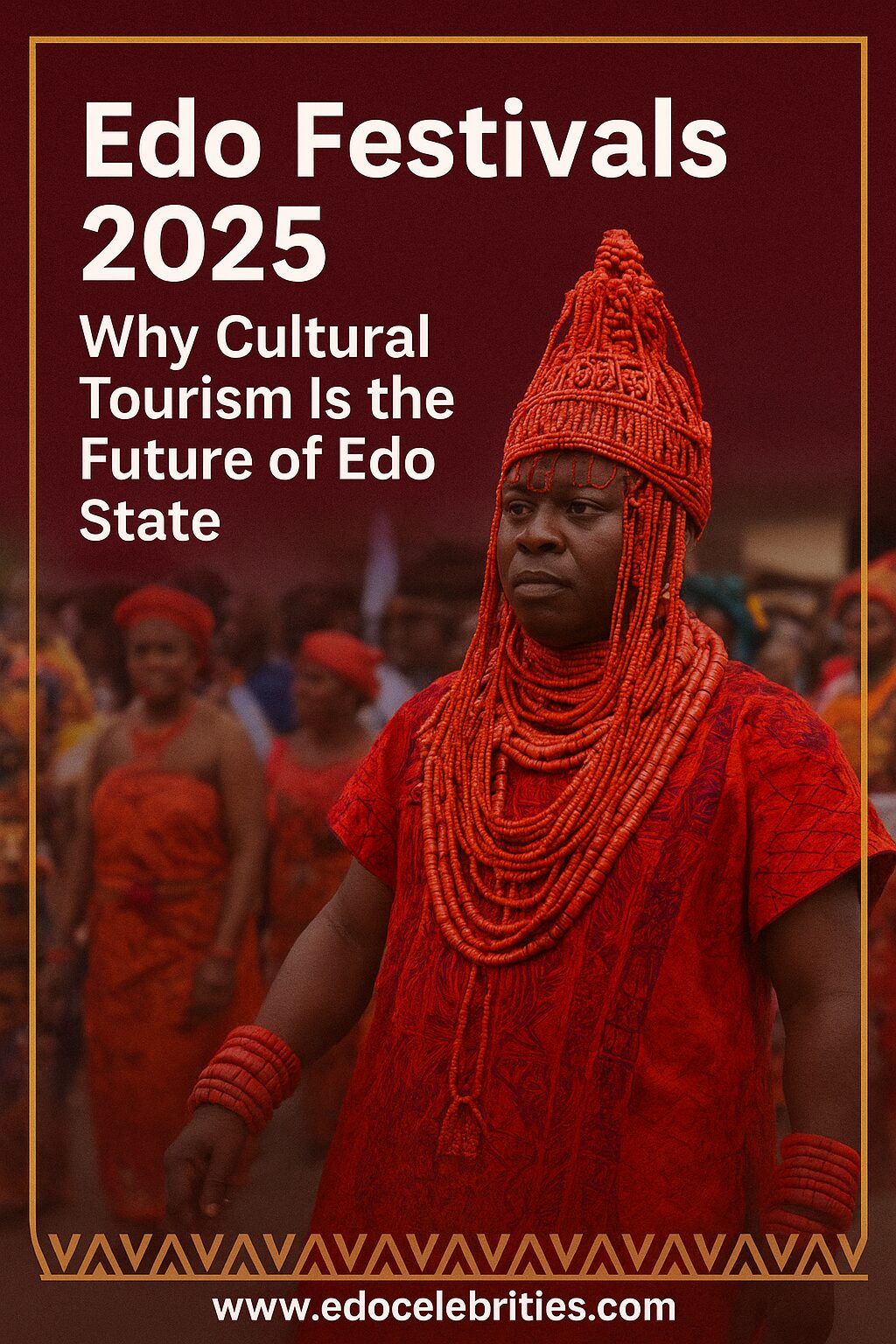
Edo State is poised to cement its place as a hub of cultural tourism in Nigeria, thanks to its vibrant festivals that celebrate history, tradition, and community spirit. In 2025, festivals like Igue, Ugie, and other traditional celebrations are attracting increasing attention from both local and international tourists, showcasing the rich heritage of the Edo people.

Celebrating Tradition Through Festivals
Among the most iconic Edo festivals is the Igue Festival, an annual royal celebration that honors the Oba of Benin and the state’s spiritual heritage. The festival features colorful processions, traditional music, and dances that narrate stories of the Benin kingdom. Similarly, the Ugie Festival brings together communities to celebrate unity, harvest, and cultural rituals that have been preserved for centuries.
Festival participants dress in elaborate traditional attire, perform age-old dances, and showcase Edo craftsmanship, including bronze works, beadwork, and intricate fabrics. These vibrant displays not only preserve Edo heritage but also offer a glimpse of the kingdom’s history to visitors.
Tourism and Economic Impact
Cultural tourism is emerging as a key economic driver for Edo State. Festivals attract tourists, generate income for local businesses, and promote Edo as a cultural destination. Hotels, restaurants, and transport services experience heightened activity during festival periods, benefiting both urban and rural communities.
“During the Igue Festival, we see an influx of tourists from Lagos, Abuja, and even abroad. It’s good for our local businesses, and it helps preserve our culture,” said a local trader in Benin City.
For 2025, the Edo State Tourism Board has launched initiatives to make festivals more accessible to tourists, including guided tours, festival schedules, and cultural workshops.
Travel Tips for Visitors
For tourists planning to attend Edo Festivals 2025, here are some tips to make the experience memorable:
-
Plan Ahead: Check festival dates and book accommodations early.
-
Dress Respectfully: Some ceremonies are sacred; modest attire is recommended.
-
Engage Locals: Interact with community elders and performers to learn about the historical significance of each festival.
-
Capture Memories: Photography is allowed at most events, but always seek permission when photographing sacred rituals.
-
Try Local Cuisine: Edo festivals feature traditional dishes like Ukodo (yam pepper soup) and Owo soup—don’t miss out.
Voices From the Festival Ground
Interviews with past festival participants reveal the emotional and cultural significance of these events.
“The festivals remind us of who we are as Edo people. Igue and Ugie keep our traditions alive for our children and tourists alike,” said Chief Eghosa, a cultural custodian.
Tourists have echoed this sentiment, praising Edo festivals for their authenticity and immersive experience. Many have remarked that the warmth of the people, coupled with colorful ceremonies, makes Edo festivals a must-see for cultural travelers.
Preserving Edo Heritage for Future Generations
As Edo State continues to invest in cultural tourism, these festivals are playing a dual role: celebrating tradition and providing economic opportunities. By attracting visitors, festivals incentivize local communities to maintain their customs, arts, and crafts.
State officials emphasize that festivals are not just entertainment—they are a living archive of Edo’s history and identity. Through cultural tourism, Edo State is creating a sustainable model where heritage and economy complement each other.
Conclusion
Edo Festivals 2025 offer more than just colorful displays and traditional performances—they are gateways to the rich history, arts, and culture of Edo State. By promoting cultural tourism, the state is ensuring that its traditions are preserved while simultaneously boosting economic growth. Whether attending Igue, Ugie, or other local celebrations, tourists are guaranteed an immersive experience that reflects the pride, vibrancy, and resilience of the Edo people.
Plan your visit, immerse yourself in tradition, and witness Edo culture come alive in 2025
Leave a Reply