
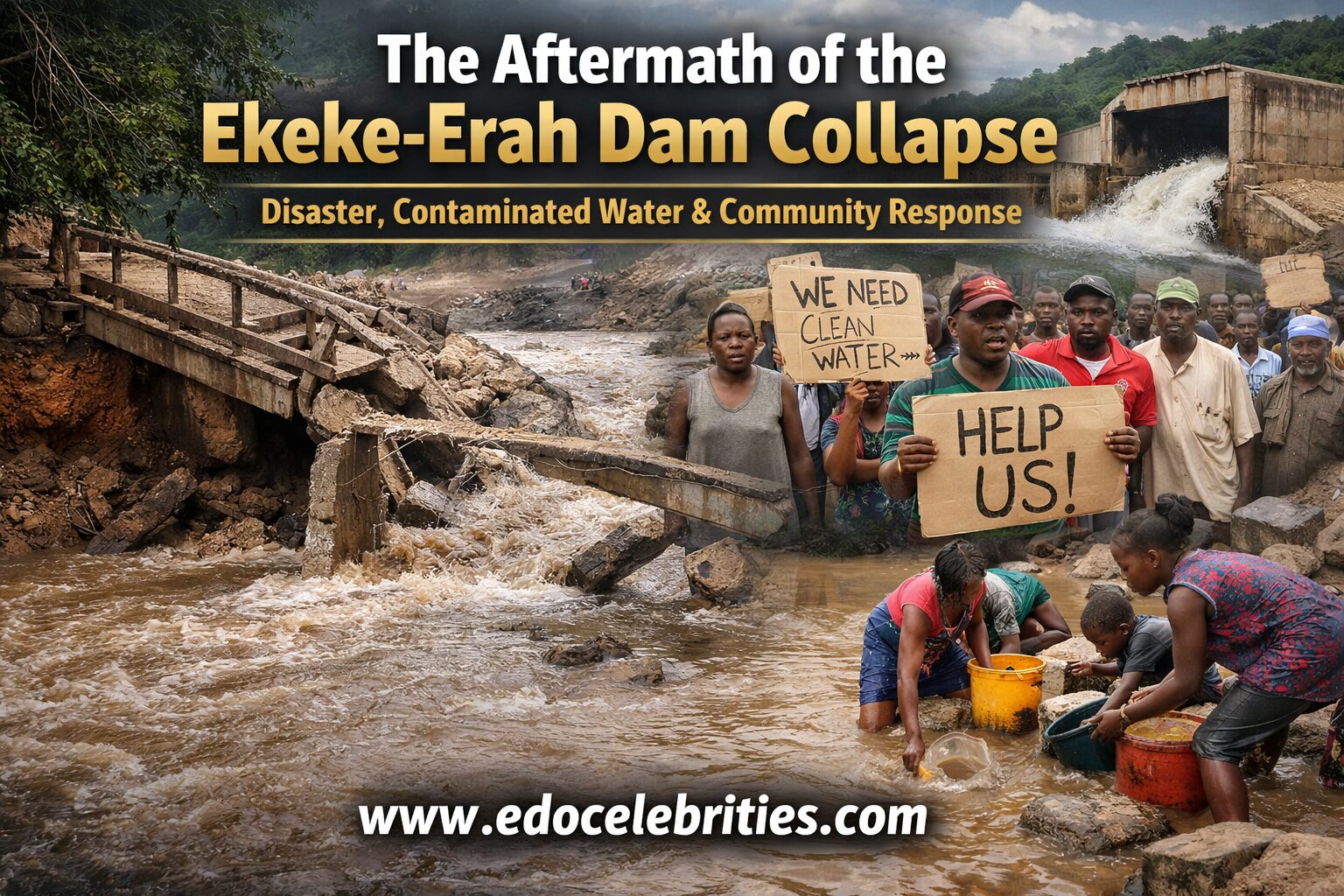
The serene Ekeke-Erah community in Owan East Local Government Area, Edo State, was thrust into hardship following a catastrophic dam collapse that has left homes flooded, farmlands ruined, bridges destroyed, water sources contaminated, and residents pleading for urgent help.
A Sudden Collapse with Lasting Impact
On January 22, 2025, a dam constructed at the source of the Oghidekpe River unexpectedly gave way, unleashing vast volumes of water across Ekeke-Erah and surrounding settlements. The resulting floods devastated infrastructure and natural resources. Key bridges — including the First and Second Oghidekpe Bridges, Osemihien River Bridge, and Ovbieda River Bridge — were washed away, cutting off vital transportation links for schoolchildren, traders, workers, and emergency services.
Local leaders state that the collapse also submerged farmlands, dealing a severe blow to the agricultural livelihoods that sustain many families in the region. Crops were destroyed, and food production capacity was significantly reduced, further compounding economic hardship for residents already navigating Nigeria’s rising living costs.
Contaminated Water and Health Risks
Perhaps most alarming is the contamination of the Oghidekpe River — the community’s main source of drinking water. With no safe water available, residents began suffering from illnesses associated with polluted water, and some have required medical attention in local health facilities.
The village head, Chief Yakubu Kadiri, emphasized the severity of the crisis: residents have been without clean drinking water for days, relying on unsafe sources that pose a risk of waterborne diseases. Without rapid intervention, the situation could worsen, placing children and the elderly at disproportionate risk.
Calls for Government and Community Action
Despite initial visits from the Edo State Emergency Management Agency (EDOSEMA), tangible support — such as clean water supplies, medical teams, food aid, and infrastructure rebuilding — has not yet been delivered. This has led to growing frustration among the people of Ekeke-Erah.
In response, community members staged a peaceful protest demanding urgent government intervention. Politicians, including Hon. Aruna Mohammed and Hon. Barr. Eric Okaka, pledged support and promised infrastructure repair and boreholes for potable water. However, many residents say they are still waiting for these commitments to materialize.
Environmental Advocates Speak Out
Environmental groups such as the Environmental Defenders Network (EDEN) have also sounded the alarm, calling on the Edo State Government and relevant ministries to provide immediate relief and to consider long-term environmental safeguards to prevent future disasters. EDEN’s Executive Director, Chima Williams, criticized the slow response and urged authorities to deploy medical teams and compensate victims for lost property and agricultural output.
Bridging the Gap Between Crisis and Recovery
The collapse of the dam highlights broader concerns around infrastructure maintenance, environmental management, and disaster preparedness in Nigeria. Experts warn that poorly managed dams can magnify the impacts of extreme weather and climate change, leading to flooding, displacement, and public health emergencies.
For Ekeke-Erah’s residents, however, the immediate priority remains clear:
→ Safe drinking water and emergency medical care
→ Reconstruction of destroyed bridges and roads
→ Support for displaced families and rehabilitating farmland
→ A robust plan to prevent future dam failures
Leave a Reply