
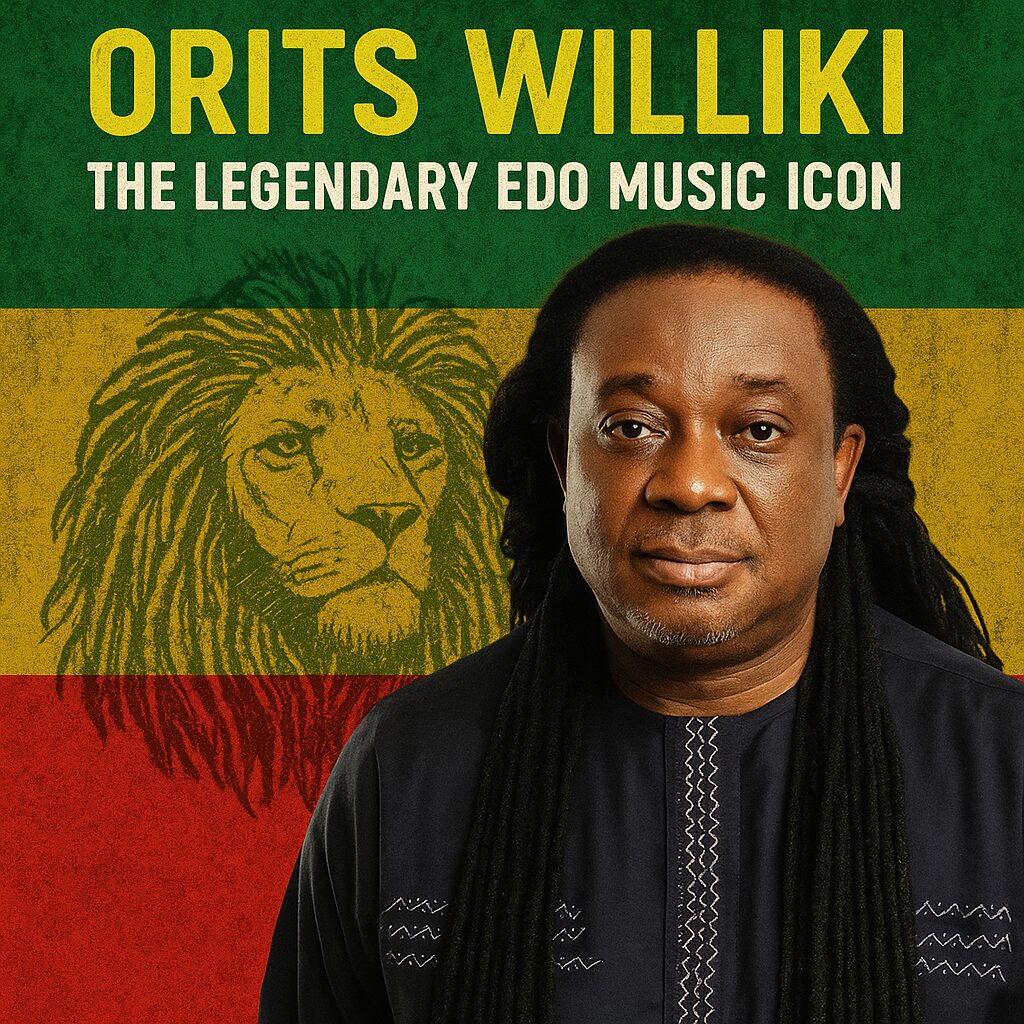
When you speak of Nigerian reggae pioneers, the name Orits Williki stands tall among the greats. Known for his distinctive voice, socially conscious lyrics, and cultural influence, Orits Williki remains one of Edo State’s most celebrated music legends, whose art has inspired generations of musicians across Nigeria and beyond.
Born in the early 1960s in Warri, Delta State, to Edo parents, Orits Williki (Orits Wiliki) rose to prominence in the 1980s during the golden era of Nigerian reggae. His music combined roots reggae rhythms, African consciousness, and messages of love, peace, and justice, earning him recognition as a voice for the people.

Early Life and Musical Journey
Orits Williki began his musical career in the mid-1970s, performing with various local bands before forming his own group. His early sound was heavily influenced by Jamaican reggae legends such as Bob Marley, Peter Tosh, and Burning Spear, but he infused his songs with distinct African percussion and Edo cultural identity, giving his music a unique local flavor.
His breakthrough came with the release of his hit album “Tribulation” (1989), which featured timeless classics like Heart of Stone, Stoned by Love, and Fight the Fire. The album established him as a major force in African reggae and won him nationwide acclaim for its powerful storytelling and soulful delivery.
Rise to Stardom and Influence
Through the late 1980s and early 1990s, Orits Williki’s music became a staple on Nigerian radio and television. Songs such as Love Is a Shield, Think About the People, and Africa Must Unite resonated with fans who were searching for hope and direction in difficult times.
He was not just a musician but a cultural ambassador, proudly showcasing Edo heritage through his music videos, stage performances, and public appearances. His lyrics often addressed social justice, unity, and moral values, reflecting his belief that music should inspire change and preserve African identity.
Orits Williki also mentored several young artists, encouraging the next generation to embrace their roots and use music as a tool for transformation.
Awards and Recognition
Throughout his career, Orits Williki received numerous awards and honors for his contribution to Nigerian music. He was recognized by various entertainment and cultural bodies for promoting reggae as a medium of African expression and for his role in shaping the Edo musical landscape.
He was also a strong advocate for the rights of musicians, serving as a member of the Performing Musicians Employers’ Association of Nigeria (PMAN), where he championed better welfare and recognition for artists.
Legacy and Contributions to Edo Music
Orits Williki’s legacy extends far beyond his songs. He helped put Edo State on the musical map, paving the way for other Edo-born musicians such as Majek Fashek, Victor Uwaifo, and Osayomore Joseph.
His ability to blend reggae with African spirituality, Edo proverbs, and conscious storytelling made him a true symbol of Edo resilience and creativity.
Even today, his works continue to inspire upcoming artists in Benin City and across Nigeria who look up to him as a pioneer of Edo roots reggae — a man who used his art to educate, enlighten, and unite people.
Personal Life
Though a private individual, Orits Williki is known for his humility and deep spirituality. He remains active in mentoring younger musicians and continues to perform occasionally at cultural events and music festivals.
His marriage to fellow musician Becky Orits Williki, a gospel artist, has also been widely celebrated in the entertainment industry as one of mutual respect and shared purpose in music and faith.
Leave a Reply