
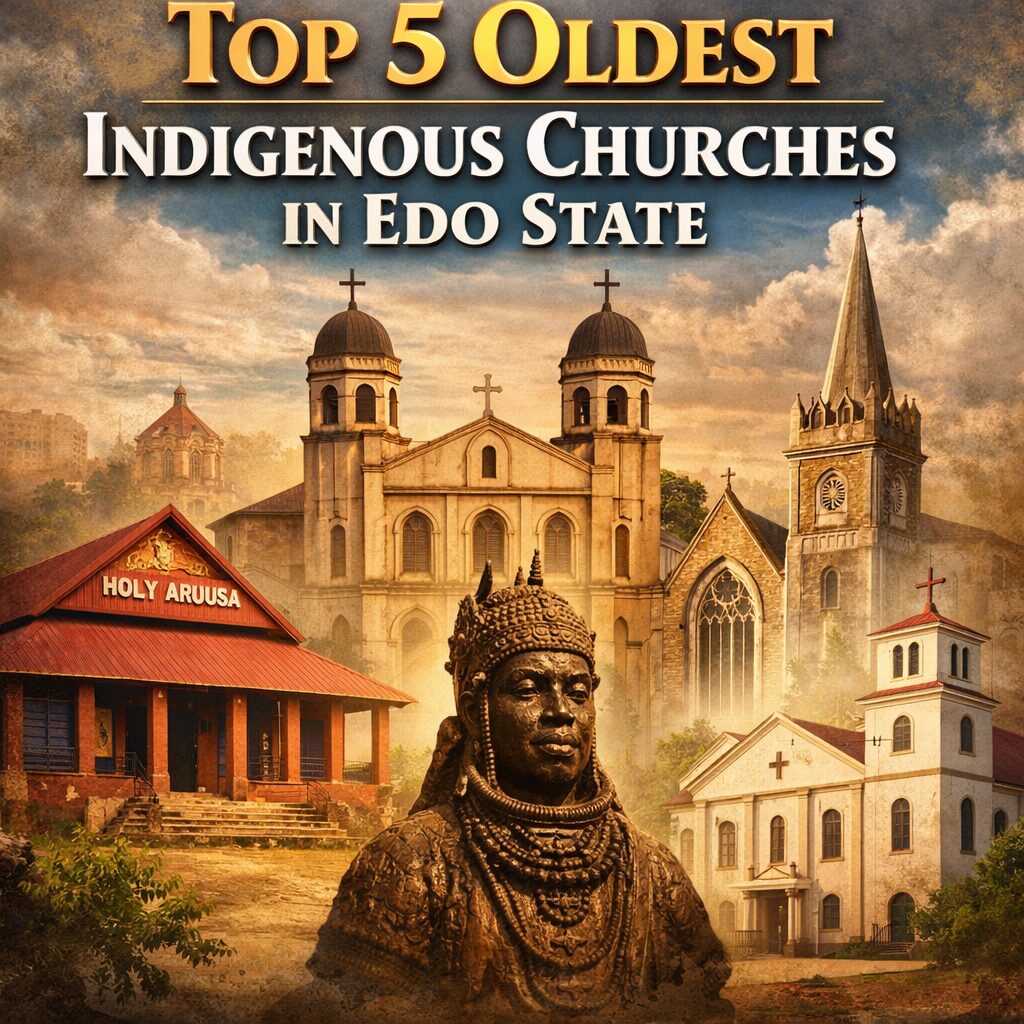
Edo State, particularly Benin City, holds a unique place in Nigeria’s religious history. Christianity arrived in the ancient Benin Kingdom as early as the 15th century through Portuguese missionaries, leading to the establishment of some of the oldest churches in West Africa. Over the centuries, these churches evolved into institutions deeply rooted in Edo culture and identity.
Below are the top five oldest indigenous churches in Edo State.
1. Holy Aruosa Cathedral (Founded 1517)
The Holy Aruosa Cathedral is widely regarded as the oldest church in Edo State and one of the oldest in Nigeria. It was founded in 1517 during the reign of Oba Esigie with influence from Portuguese missionaries.
Unlike most churches, Holy Aruosa combines Christian teachings with traditional Benin spirituality and recognizes the Oba of Benin as its spiritual head. Its sacred text, known as the Book of Holy Aruosa, contains teachings rooted in ancient Benin beliefs about Osanobua (God).
Today, the cathedral remains a powerful symbol of indigenous faith and cultural heritage in Benin Kingdom.
2. Holy Cross Cathedral (Catholic Mission – 19th Century Roots)
Holy Cross Cathedral in Benin City is the headquarters of the Roman Catholic Archdiocese of Benin City. The Catholic mission in the region was formally established in 1884 when the Apostolic Prefecture of Upper Niger was created.
Although missionary activity began earlier, the late 19th century marked the permanent establishment of Catholic institutions in Edo land. Over time, the church produced indigenous clergy and became deeply integrated into local communities.
3. Church of Nigeria (Anglican Communion) – Benin Diocese (Early 20th Century)
Anglican Christianity spread into Edo through the Church Missionary Society (CMS) during the colonial era. The Diocese of Benin later became one of the major Anglican jurisdictions in southern Nigeria.
Today, Anglican churches in Edo State are considered indigenous because of strong local leadership, community ownership, and cultural adaptation. The Anglican Province of Bendel now oversees multiple dioceses within Edo State.
4. Methodist Church Nigeria – Benin Missions (19th Century)
Methodist missionaries were among the early Protestant evangelists in West Africa, and their work reached the Benin region in the 19th century.
The Methodist Church played a major role in education, literacy, and social development in Edo communities. Many early schools and institutions in Benin were linked to Methodist missions, helping the church gain strong indigenous roots.
5. Indigenous Catholic Parishes of Old Benin (Pre-Colonial Catholic Presence)
Historical records show that Catholic missionaries were present in Benin as early as the 15th–17th centuries, long before the modern colonial era. Some early Catholic communities collapsed after missionaries left around 1713, but traces remained among local converts who preserved Christian symbols and practices.
When missionaries returned in the 19th century, they rebuilt the church on indigenous foundations that had already existed among the people.
The Cultural Importance of Churches in Edo State
Christianity in Edo State is not just a religion — it is part of the region’s cultural evolution. Churches contributed significantly to:
-
Western education and literacy
-
Healthcare development
-
Social reforms
-
Community organization
-
Cultural identity formation
The blend of indigenous traditions with Christian beliefs is particularly visible in institutions like Holy Aruosa, which remains unique in Africa.
Conclusion
Edo State stands out as one of the earliest centers of Christianity in Nigeria. From the 16th-century Holy Aruosa Cathedral to the 19th-century Catholic and Protestant missions, these churches shaped the religious and social landscape of the region.
Their legacy continues today through millions of worshippers across the state.
Leave a Reply