
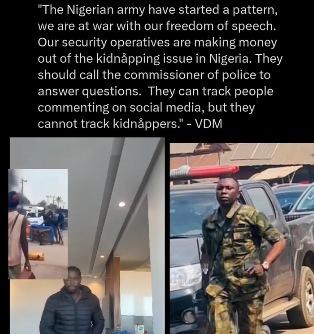
Controversial Nigerian social media activist and civil rights commentator Martins Vincent Otse, popularly known as VeryDarkMan (VDM), has reignited debate over freedom of expression, state power, and the handling of Nigeria’s growing security crisis — particularly the surge in kidnappings across the country.
In a fiery video post that has been widely shared on social media, VDM accused security operatives — including the army and police — of suppressing dissent while profiting from what he described as a “kidnapping industry.” The influencer argued that authorities are more efficient at tracking critics online than they are at tracking kidnappers and criminal networks responsible for rampant abductions.
VDM’s Accusations Against Security Authorities
In the clip, VDM says the Nigerian Army has established a pattern of targeting dissenting voices, accusing them of effectively declaring war on freedom of speech. According to him, the state’s security apparatus is quick to pursue critics — including himself — while failing to stem the tide of kidnappers plaguing communities nationwide.
“They can track people commenting on social media, but they cannot track kidnappers,” VDM asserts in his message, charging that security operatives are profiting from the kidnapping crisis rather than tackling it head-on. He also called on the Inspector General of Police (IGP) and other senior officials to publicly answer questions about what he sees as the “priorities and failures” of Nigeria’s security agencies.
VDM’s outburst comes amid continued public frustration with Nigeria’s handling of insecurity, especially kidnappings for ransom which have affected families, communities, students and travellers across multiple states.
Backlash Surrounding VDM and Government Relations
The activist’s criticism of the authorities has previously landed him in legal trouble. In May 2025, VDM was arrested by the Economic and Financial Crimes Commission (EFCC) following petitions alleging cyberstalking and other offences — an action that attracted significant protest and condemnation from fellow activists, political figures, and Nigerian youths.
His arrest drew comparisons to broader concerns about the weaponization of laws against social media expression, with commentators warning that vague cybercrime statutes could be misused to stifle critique rather than punish genuine wrongdoing. In fact, legal experts and rights advocates have cautioned that laws like the Cybercrimes Act can be interpreted in ways that chill free speech when used against outspoken personalities.
Growing Discontent Over Security Failures
VDM’s claims echo broader public sentiment that although Nigeria’s government and security agencies have significant resources, these are not being deployed effectively to protect citizens from kidnappers, bandits, and organized criminal syndicates. Many Nigerians have taken to social platforms to express similar frustrations, noting that while authorities can monitor individuals online, they often fail to track criminal gangs who communicate freely with victims’ families.
This perceived imbalance — where critics say expression is policed more rigorously than violent criminals — has fuelled debate over national security priorities, civil liberties, and transparency in law enforcement.
Calls for Accountability and Reform
In response to VDM’s commentary, civil rights advocates and legal experts have urged the government to respect freedom of speech while also investing more in intelligence-led policing and judicial accountability to better address both online grievances and real-world crime.
Many Nigerians agree that any suggestion of profiteering by security operatives from kidnapping ransom payments needs to be investigated transparently, and that authorities should be held accountable if found to be complicit in any way.
Whether VDM’s comments will prompt official responses from the police or the military remains to be seen. But his remarks have once again thrust the issues of freedom of expression and security strategy into the national spotlight, reigniting conversations about how Nigeria can better protect its people while upholding democratic rights.
Leave a Reply