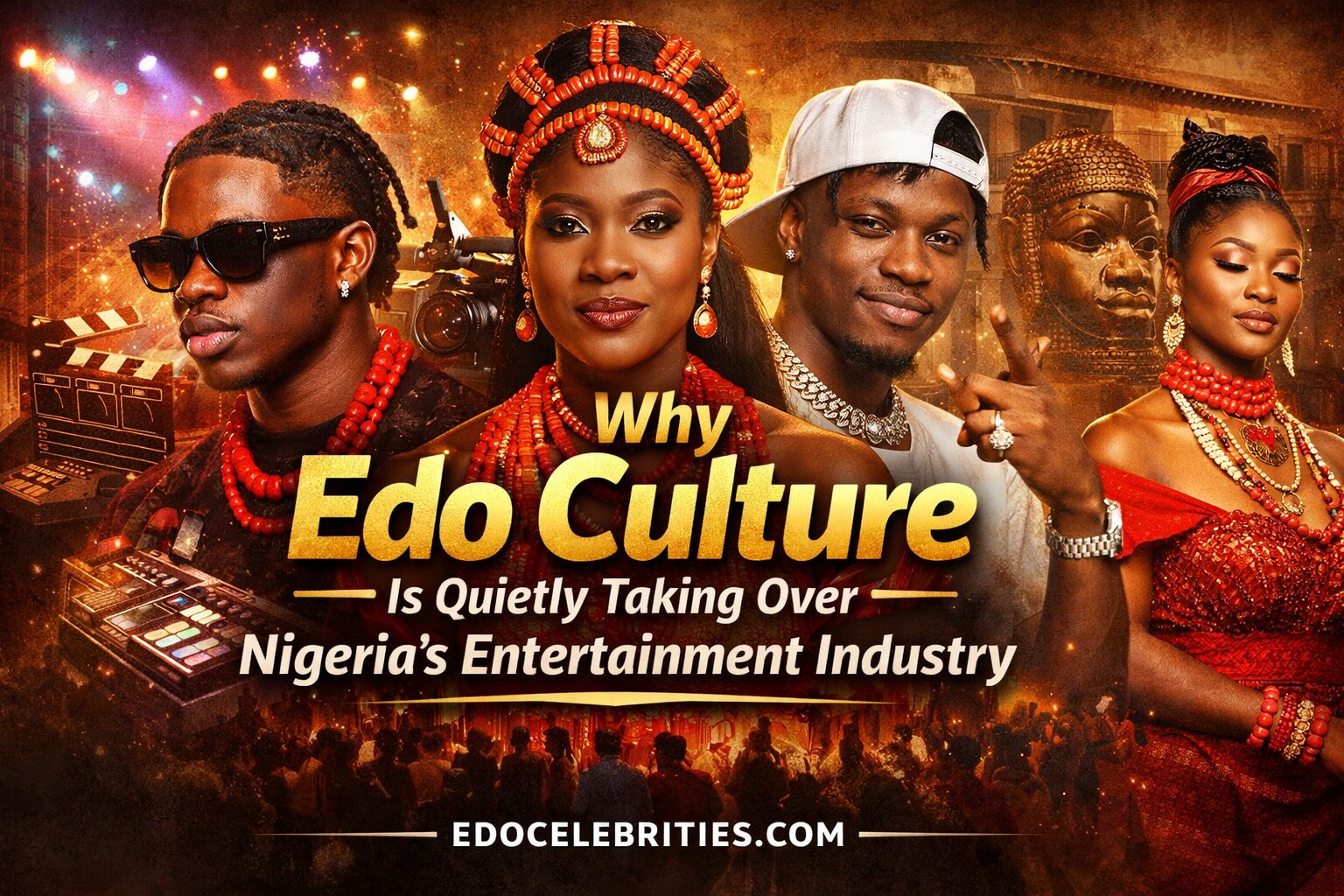
For years, the spotlight in Nigeria’s entertainment scene has shifted between different regions and sounds—but something subtle, powerful, and impossible to ignore is happening right now: Edo culture is rising, and it’s shaping the industry from behind the scenes to center stage.
This isn’t loud dominance. It’s not forced.
It’s organic, influential, and deeply rooted—the kind people only notice when it’s already everywhere.
Afrobeats: The Edo Sound in the Mainstream
Take a closer listen to today’s Afrobeats, and you’ll start to hear it—the Benin rhythm, the street-rooted storytelling, the unapologetic energy.
Artists like Rema have not only taken Afrobeats global but infused it with a distinct identity that blends modern sound with cultural depth. His style, confidence, and sonic experimentation reflect a new generation that is proudly rooted in where they come from.
Then there’s Shallipopi, whose street anthems carry raw Edo slang, Benin vibes, and a rebellious authenticity that resonates with the youth. His music doesn’t try to “fit in”—it redefines the culture.
Even beyond the mainstream, Edo creatives are influencing:
- Sound direction
- Street slang trends
- Visual identity in music videos
What used to be “local flavor” is now becoming national and global appeal.
Nollywood: Edo Presence Behind and On the Screen
Edo influence in Nollywood isn’t new—but now, it’s becoming more visible and impactful.
From actors to producers, Edo roots run deep in storytelling, particularly in:
- Traditional narratives
- Royal themes inspired by the Benin Kingdom
- Strong female-led roles
Actresses like Mercy Johnson embody that Edo strength—bold, expressive, and commanding attention on screen.
Beyond acting, Edo creatives are shaping scripts, directing stories, and bringing authentic African heritage into modern cinema.
Fashion: Tradition Becoming Trend
Step into any high-end Nigerian event or scroll through Instagram—and you’ll see it:
- Coral beads
- Rich red attire
- Regal silhouettes
These are not just fashion statements—they are Edo cultural symbols, now becoming mainstream style.
The Benin-inspired look is no longer reserved for traditional ceremonies. It’s now:
- Featured in music videos
- Worn by influencers
- Reimagined by designers
Edo fashion carries a royal identity, and in an era where authenticity sells, that identity is becoming a major currency.
The Cultural Advantage: Identity Over Imitation
While many chase trends, Edo creatives are doing something different:
They’re building from identity, not imitation.
That’s the real power behind this quiet takeover.
- The confidence in language (Pidgin + Edo dialect)
- The pride in heritage
- The bold, almost rebellious self-expression
It creates a brand that is distinct, exportable, and unforgettable.
🚀 The Hidden Dominance Everyone Is Just Noticing
What makes this rise interesting is that it didn’t come with noise or announcement.
No campaign.
No coordinated movement.
Just consistent influence across music, film, and fashion—until suddenly, people started asking:
“Why does it feel like Edo culture is everywhere right now?”
Because it is.
Edo culture isn’t just participating in Nigeria’s entertainment industry anymore—it’s shaping its direction.
From the global sound of Afrobeats to the evolving stories in Nollywood, and the bold statements in fashion, the influence is clear:
This is not a moment. It’s a movement.
Do you think Edo culture is now the most influential in Nigeria’s entertainment space—or is it just getting the recognition it has always deserved?
Leave a Reply